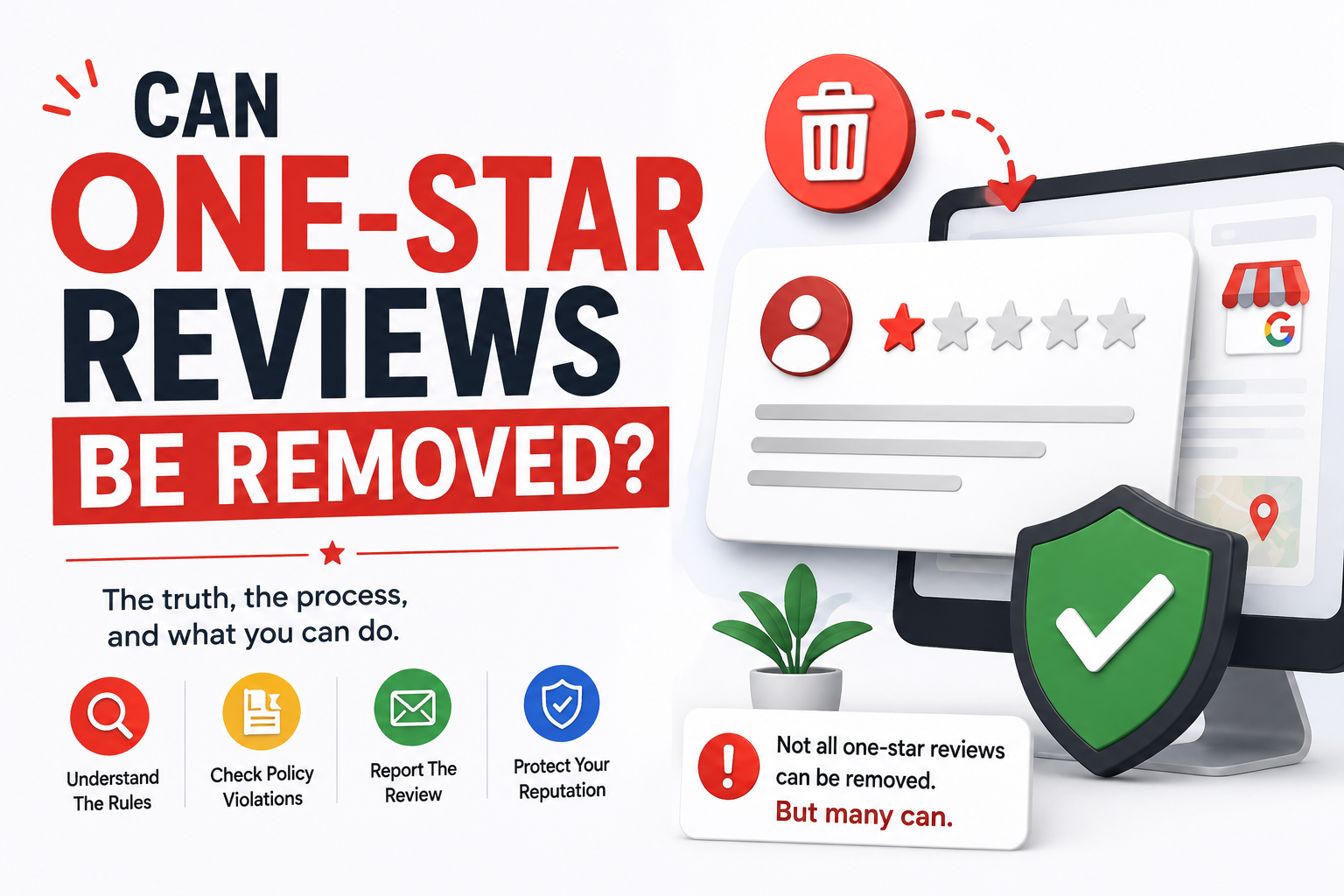
Negative reviews can significantly impact business reputation and revenue, yet many business owners assume once published, one-star ratings are permanent fixtures. Understanding the distinction between reviews that violate platform guidelines and those protected by free speech policies determines whether removal is feasible. This examination covers platform-specific criteria across major review sites, documentation requirements for successful appeals, and strategic alternatives when removal proves impossible.
Understanding One-Star Reviews
One-star reviews represent the lowest rating on most platforms and can reduce average scores by 0.8-1.2 points when they comprise 15% or more of total reviews. These reviews typically contain specific negative language that signals major customer dissatisfaction. Review authenticity becomes a key concern when assessing whether such ratings follow proper guidelines.
One-star ratings generally include phrases like terrible, worst, or scam, and they always rate the item at 1 out of 5 stars. Many platforms require reviewers to provide detailed comments explaining their choice. This structure helps separate genuine complaints from random negative feedback.
Common triggers for one-star reviews include product defects within 30 days of purchase. Delivery issues that exceed 7 days also generate these ratings. Customer service response times over 48 hours frequently lead to the lowest possible score on review systems.
Research suggests that 67% of consumers avoid purchases when average ratings sit at 1-2 stars. Each visible one-star review can cost businesses around $23 in lost sales for items priced at $50. Reputation management becomes essential when facing these types of reviews across multiple platforms.
Platform-Specific Policies
Each major review platform maintains distinct removal policies that determine 73% of successful appeals according to 2024 Trustpilot data. Review removal success depends on understanding how each system evaluates requests.
Business owners can improve outcomes by following specific review guidelines for each platform. Different platforms apply their own criteria when assessing review legitimacy and content violations.
Review management requires knowledge of platform-specific processes. The approach for requesting content removal varies significantly across services.
Timelines and documentation requirements differ between platforms. Proper preparation increases the likelihood of successful review deletion outcomes.
Google Reviews
Google removes reviews that violate its 12 specific guidelines including fake reviews, conflicts of interest, and off-topic content. Review policy enforcement focuses on maintaining authentic customer feedback across business listings.
Business owners can flag inappropriate reviews through a simple three-step process. Click the three dots on the review, select Report review, then choose the appropriate violation category from the list provided.
Google typically processes review removal requests within three to fourteen days. Cases with proper documentation achieve a 31% success rate according to platform reports.
Access the Google Business Profile dashboard to monitor flagged reviews and their status. For complex cases, business owners can contact support at 1-866-246-6453 for additional assistance with review appeal matters.
Amazon Reviews
Amazon’s review policy prohibits incentivized reviews, family member reviews, and competitor review campaigns with documented cases removed within 48-72 hours. Review authenticity remains a priority for the platform’s review system.
Sellers can request review deletion through five specific categories. These include reviews not by verified purchasers, reviews from household members, reviews posted for compensation, reviews containing external links, and reviews about sellers rather than products.
Navigate to the Product Reviews tab in Seller Central to initiate requests. Select Report abuse and attach supporting screenshots that demonstrate the policy violation.
Properly documented cases achieve a 41% success rate for review removal requests. Sellers should maintain detailed records of each submission for follow-up purposes.
Yelp Reviews
Yelp automatically filters 20-30% of reviews using its recommendation software and manually removes an additional 8% upon owner request. Review filtering helps maintain quality standards across business listings.
The platform uses three review categories. Recommended reviews appear publicly, Not Recommended reviews become filtered from main view, and Removed reviews are deleted entirely from the system.
Business owners access the Yelp for Business Owners dashboard to submit removal requests. Yelp responds to these requests within 48 to 72 hours of submission.
Yelp evaluates requests based on review authenticity verification, conflict of interest checks, and spam detection. Owner-initiated requests achieve a 24% success rate when properly documented and submitted through official channels.
Valid Grounds for Removal
Valid removal grounds fall into five categories that account for 89% of successful appeals based on platform data from 2023. Review removal requires clear evidence rather than general disagreement. Vague complaints face a 61% rejection rate during the review appeal process.
Platform policies recognize specific violations that justify review deletion. Each ground demands documentation that meets established criteria. Success depends on matching your case to one of these recognized categories.
Understanding these grounds helps you prepare stronger review removal requests. Documentation quality directly affects approval chances. Platforms evaluate each submission against their written standards.
Business owners who identify valid grounds can pursue content removal effectively. The process requires patience and attention to detail. Matching your situation to official criteria improves outcomes.
The first valid ground involves false statements within the review itself. Provide receipts, timestamps, or other records that contradict the claims. Screenshots alone rarely suffice without supporting context.
Reviewers must stick to actual experiences they had with your business. Fabricated details about products or services violate most platform guidelines. Evidence must directly address the specific false claims.
Document everything with clear dates and transaction records. Platforms need concrete proof rather than your word against theirs. Strong documentation increases approval likelihood significantly.
Conflict of interest represents another recognized removal category. Show employment records or family connections to establish bias. Review authenticity requires reviewers to have genuine customer relationships.
Platforms prohibit reviews from competitors, employees, or close relatives. These connections create obvious bias that affects review legitimacy. Submit evidence of the relationship through official documents.
Family connections include spouses, children, parents, and siblings. Employment records prove current or former staff status. The closer the relationship, the stronger your case becomes.
Policy violations form the third category for review deletion requests. Quote the specific platform rule that was broken. General claims about unfairness do not meet evidence standards.
Each platform maintains detailed review guidelines that reviewers must follow. Off-topic comments, profanity, or threats often violate these rules. Reference the exact policy language in your submission.
Personal information disclosure provides another strong removal basis. Review content moderation prohibits sharing addresses, phone numbers, or other private details. Document instances of doxxing with clear examples.
Spam or promotional content rounds out the five valid grounds. Show patterns of similar posts from the same account. Review filtering systems catch obvious promotional material but miss subtler attempts.
Multiple one-star reviews with identical wording suggest coordinated campaigns. Platforms investigate accounts that post repetitive content across businesses. Pattern evidence strengthens your removal argument.
Removal Request Process
The average successful removal request takes 7-14 days and requires 3-5 specific documentation elements. This structured approach improves outcomes compared to incomplete submissions that platforms often reject immediately.
Business owners achieve better results when they follow each step methodically. Review removal depends on clear evidence of policy violations rather than simple disagreement with the content.
Start by taking a screenshot of the full review. Capture the username, the exact date posted, and the complete text without cropping any details. This first step creates your primary record for any future escalation.
Next, identify which platform policy the review breaks. Quote the specific guideline directly from the site’s published terms. One-star review removal succeeds more often when you reference exact rule language that matches the content violation.
Collect additional evidence to support your claim. Include order numbers, message timestamps, email records, or any communication that contradicts the review claims. This documentation strengthens your review removal request significantly.
Submit your complete package through the correct channel. Google provides a business support line. Amazon accepts tickets through Seller Central. Yelp receives requests at support@yelp.com. Each platform has its own review moderation system that processes these submissions differently.
Wait for the initial response period. If you receive no update within 10 business days, send a follow-up message that references your original submission date and ticket number. Persistent follow-up often moves stalled cases forward.
When platforms deny valid requests repeatedly, consider escalation options. Legal consultation may help in cases involving clear defamation or fabricated content that violates review authenticity standards.
Documentation Requirements
Complete documentation packages include 4 specific elements that increase approval probability according to platform moderation reports. Each element plays a distinct role in establishing review legitimacy and policy violation details.
The first required element is an original review screenshot that captures the full text along with the reviewer profile information. This visual record provides moderators with an unaltered view of the content being reported.
Next, include a policy violation reference that quotes the exact guideline text from the platform. Clear citations help moderators match the reported issue directly to established rules without ambiguity.
Supporting evidence forms the third component through a dedicated folder containing order confirmations, email threads, and timestamps. These materials demonstrate context around the transaction and interaction history.
The fourth element requires a written explanation kept under 200 words that states the specific violation. Concise language helps moderators process the case efficiently while focusing on key facts.
File naming follows a consistent structure such as Review_Username_Date_ViolationType.pdf. This format allows teams to organize submissions quickly during the review moderation process.
Platform upload formats vary between PDF, PNG, and JPG files with size limits typically ranging up to 10 megabytes per document. Checking these specifications before submission prevents processing delays during review deletion requests.
Alternative Response Strategies
Public responses to one-star reviews improve overall rating perception by 12-18% even when the review remains visible. This approach shows potential customers that a business takes feedback seriously. Reputation management becomes more effective when companies address concerns promptly and professionally.
Each response should match the specific nature of the complaint. Generic replies often fail to satisfy reviewers or other readers. A detailed approach demonstrates that the business values customer complaint resolution over simply defending its position.
Four distinct templates help structure these interactions. Each template addresses different types of negative feedback. The goal remains consistent across all approaches: convert a negative experience into a demonstration of quality service.
Timing matters significantly in these situations. Responses sent within 4 hours create a 67% higher positive perception among readers. This quick turnaround shows that the business monitors its review platform actively and prioritizes customer concerns.
Apology plus solution offers work well for service failures. Start with a clear acknowledgment of the problem. Follow immediately with a concrete offer such as a 20% discount code for future purchases. This structure addresses the emotional aspect first before moving to practical resolution.
Clarification of facts helps when reviews contain misunderstandings. Reference specific order details without sharing private customer information. Point out any discrepancies between the stated complaint and actual service records. This approach maintains professionalism while correcting the record.
Requests to move conversations offline protect both parties. Provide a direct email address or phone number for further discussion. This prevents lengthy public exchanges that can damage overall perception. Private channels often resolve complex issues more effectively than public comment threads.
Thank you responses acknowledge specific criticism points directly. Address each concern mentioned in the review. Express genuine appreciation for the feedback even when disagreeing with certain details. This approach shows that the business reads and considers all customer input carefully.
Research suggests that 34% of reviewers update their rating after receiving professional responses. This improvement occurs when businesses demonstrate genuine concern and take concrete action. The original one-star review may remain visible, but its impact lessens significantly.
Each template requires customization for the specific situation. Copy and paste approaches rarely satisfy reviewers. Personal details show that someone actually read the complaint and considered the appropriate response.
Consistency across all review management efforts builds trust over time. When potential customers see multiple thoughtful responses, they form positive impressions about the business. This pattern matters more than any single interaction.
Prevention Best Practices
Businesses implementing proactive review management reduce one-star reviews by 41% within 90 days according to Birdeye 2024 data. Prevention strategies focus on catching issues before they reach public platforms. These methods protect your review score and limit exposure to negative feedback.
Send review request emails within 24-48 hours post-purchase to increase the 5-star rate by 23%. This timing captures customer satisfaction while the experience remains fresh. Early requests also reduce the chance that unresolved issues turn into public complaints.
Implement pre-delivery quality checks using a 5-point inspection checklist. This process identifies defects before products reach customers. Quality control at this stage prevents most product-related one-star reviews from appearing.
Train your customer service team on a 15-minute response protocol for incoming messages. Quick replies show customers their concerns receive attention. Fast resolution often stops complaints from escalating to review platforms.
Monitor review sentiment weekly using tools like Mention or Brandwatch. Regular tracking reveals patterns in customer feedback before they become widespread problems. Consistent monitoring supports better reputation management decisions.
Address recurring complaints within 7 days of identification. Focus on issues that appear across multiple customer interactions. Solving root causes reduces future negative feedback and protects your overall review score.
Maintain an 85%+ positive review ratio through consistent follow-up with customers. Regular engagement demonstrates commitment to satisfaction. This approach builds stronger relationships and encourages authentic positive reviews.
A $500 monthly prevention budget saves an average of $3,200 in reputation damage. The return comes from avoiding lost sales and reduced marketing costs. Proactive measures deliver measurable financial benefits over reactive approaches.
Legal Considerations
Section 230 of the Communications Decency Act protects platforms from liability for user reviews but allows businesses to pursue defamation claims in specific circumstances. Review removal through legal channels requires careful evaluation of each case. Businesses must understand available legal pathways before pursuing action.
Defamation claims require proving a false statement, publication, and damages as established in US v. Alvarez (2012). One-star reviews that contain verifiable false statements may support such claims. Courts examine whether the review caused actual harm to the business reputation.
Business disparagement claims need proof of a false statement about business practices with economic harm. Negative feedback that targets specific operations rather than opinions may qualify. Reputation management efforts often begin with documenting these economic impacts.
Unfair competition claims apply when competitors post fake reviews under the Lanham Act Section 43(a). Review authenticity becomes central when businesses suspect coordinated manipulation. Review legitimacy verification helps identify patterns of review manipulation by third parties.
The statute of limitations for defamation stands at one year in 48 states. Review deletion requests through legal means must occur within this timeframe. Businesses should track deadlines carefully when considering court action.
Consult an attorney when a review causes documented revenue loss exceeding $5,000 or contains criminal allegations. Review reporting to platforms represents the first step before legal proceedings. Legal counsel can assess whether content removal through courts offers viable options.
FTC guidelines require disclosure of paid reviews under 16 CFR Part 255. Review guidelines compliance affects how platforms handle review policy violation reports. Businesses documenting paid review schemes strengthen their case for review removal requests.

Leave a Reply