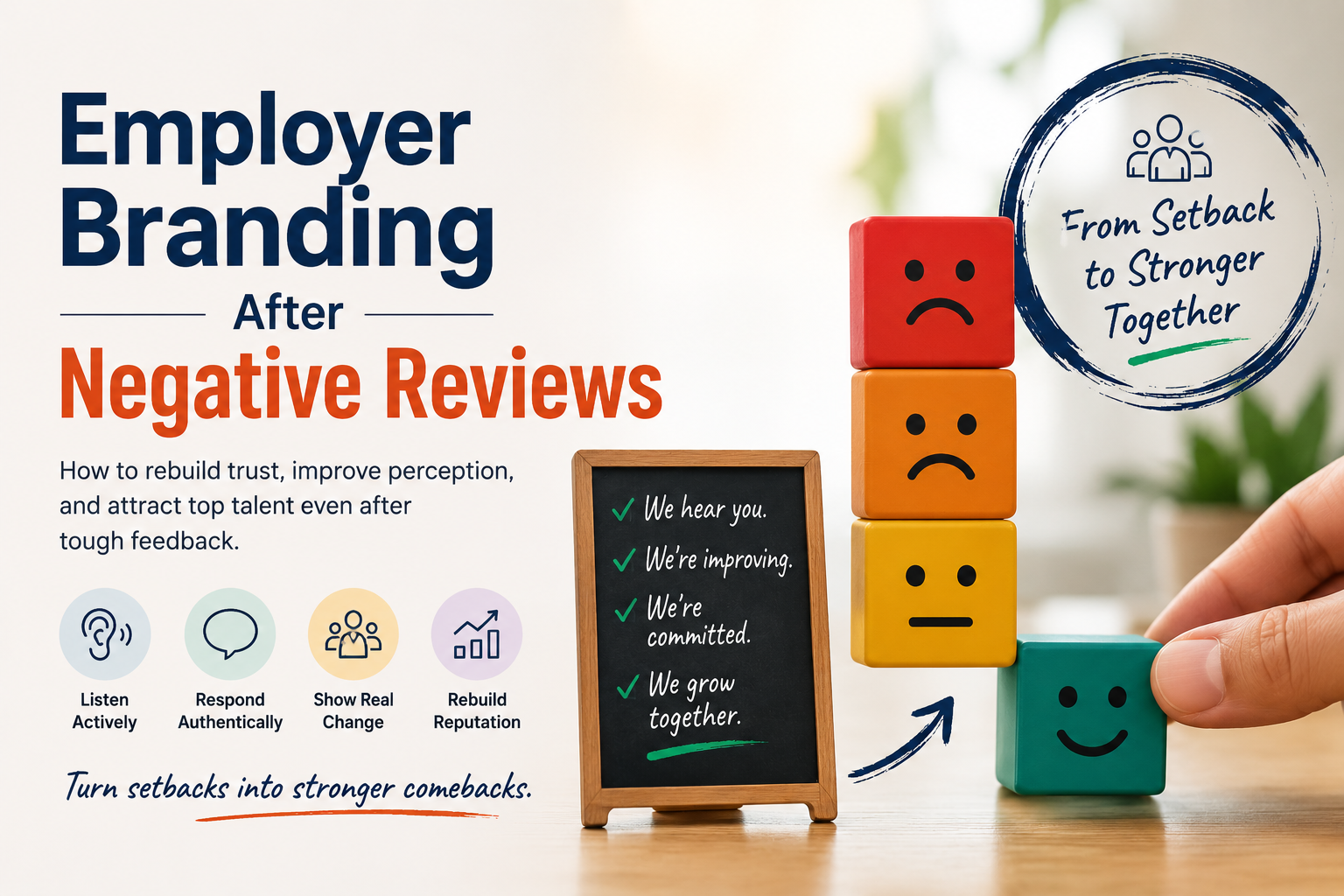
In today’s competitive talent market, even a handful of negative employer reviews can influence how prospective candidates perceive your organization. This introduction examines the immediate and lasting effects of unfavorable feedback, outlines practical steps for a measured response, and highlights proven approaches to restoring credibility. Discover how leading companies turn criticism into a catalyst for meaningful change.
Understanding the Impact
Negative employer reviews on Glassdoor and Indeed can shift candidate perception within 48 hours, with 75% of job seekers researching company reviews before applying. These platforms create direct visibility into workplace conditions that candidates compare against official messaging. The gap between intended employer value proposition and real employee experience becomes immediately visible.
Employer branding suffers when negative feedback spreads across multiple channels. Candidates form impressions based on recent comments about management practices and daily operations. This perception gap widens as more reviews accumulate without visible company responses.
Reputation management requires immediate attention once reviews appear on major job sites. The contrast between polished external communications and actual employee sentiment creates distrust among active applicants. Organizations lose control over their narrative when reviews dominate search results.
Talent acquisition teams notice changes in application volume and quality following review spikes. Candidates question claims about company culture when multiple reviews describe similar concerns. The resulting hesitation affects both recruitment speed and the caliber of applicants who proceed through the hiring process.
Analyzing Review Content
Use Brandwatch and Mention to categorize 200-300 reviews by sentiment score, authenticity markers, and specific complaint topics within 72 hours of crisis identification. These tools help distinguish between genuine employee feedback and coordinated efforts to damage brand perception. Quick analysis prevents reactive responses based on incomplete information.
Review authenticity verification involves checking patterns in posting velocity and language consistency across submissions. Semantic similarity checks identify clusters of reviews that may originate from single sources or competitor campaigns. Topic modeling separates legitimate operational concerns from attempts at sabotage.
Sentiment analysis reveals which aspects of the employee experience generate the strongest reactions. Organizations can then prioritize which issues require immediate internal review versus external communication. This structured approach prevents scattered responses that fail to address root causes.
Review analysis also tracks changes in tone over consecutive weeks. Consistent themes across multiple time periods indicate ongoing problems rather than isolated incidents. This distinction guides whether responses should focus on individual corrections or broader policy adjustments.
Identifying Common Themes
Apply Brand24’s topic clustering to identify the top 5 recurring themes across 6 months of negative reviews, then map each theme to specific departments and leadership visibility issues. This method reveals which areas of the organization generate consistent complaints. Pattern recognition helps teams understand where perception problems originate within internal structures.
Compensation transparency often appears alongside questions about promotion criteria and salary bands. Work life balance complaints frequently mention workload distribution and after hours expectations. Career development gaps surface when employees describe limited advancement opportunities and unclear progression paths.
Management credibility concerns typically reference inconsistent decision making and lack of follow through on stated commitments. Diversity and inclusion shortfalls appear in reviews describing hiring practices and team dynamics. Each theme connects to specific leadership behaviors and departmental practices.
Mapping themes to departments shows where accountability rests within the organization. Leadership visibility issues emerge when employees report limited access to decision makers or unclear communication channels. These connections help teams develop targeted responses rather than generic statements about company values.
Immediate Response Strategy
Companies facing clusters of negative reviews need clear protocols that separate public acknowledgment from internal updates. These systems help protect employer branding while showing candidates and employees that leadership takes feedback seriously.
Teams should deploy response templates within 24 hours using a tiered approach. This means a 4-hour acknowledgment for verified employee reviews and a 48-hour detailed response for candidate experience complaints. The structure keeps responses consistent and prevents delays that could worsen brand perception.
Escalation triggers activate when review sentiment scores drop below 2.5 stars on Glassdoor. Once this threshold appears, designated team members move into action and notify the appropriate stakeholders. Clear timing rules reduce confusion during stressful periods.
Document every step of the process so future incidents follow the same path. This creates accountability and helps teams refine their approach over time. Consistent execution builds trust with both current employees and potential hires.
Public Acknowledgment
Response templates should reference exact review details instead of offering generic statements. Candidates notice when replies feel personal and specific. This approach strengthens employer reputation by showing genuine attention to individual concerns.
Post templated responses on Glassdoor within 4 hours using a clear structure. Acknowledge the specific concern, provide context without defensiveness, and commit to follow-up within 7 days. This format keeps messaging consistent across all public platforms.
Maintain the same voice across LinkedIn employer branding pages so audiences see unified communication. Include a named HR contact for direct candidate follow-up. Personal accountability signals that the organization values transparency.
Review each draft before posting to ensure the tone matches your established employer value proposition. Avoid language that dismisses feedback. Thoughtful replies help shift brand perception from defensive to responsive.
Internal Communication
Schedule company-wide Slack announcement within 6 hours of review cluster identification. Quick internal notice prevents rumors and keeps everyone informed. Leadership should frame the message around shared commitment to improvement.
Follow the announcement with department-specific town halls within 48 hours. These sessions give managers space to address team questions directly. Prepare talking points in advance so messaging stays aligned.
Create internal communication sequences that begin with a CEO video message addressing review themes. Distribute manager talking points through Lattice and collect anonymous feedback via Officevibe within 72 hours. This sequence keeps information flowing in both directions.
Track participation rates in these sessions to measure engagement levels. When employees feel heard during difficult moments, employee advocacy remains stronger. Consistent internal updates support long-term trust restoration across the organization.
Rebuilding Trust
Rebuilding trust starts with structured campaigns that turn current employees into active voices for the organization. These efforts directly address the patterns found in review clustering analysis from Glassdoor reviews and Indeed ratings.
Launch trust restoration campaigns using employee advocacy platforms like EveryoneSocial to generate 15 authentic testimonials per month from current employees in affected departments. This approach creates consistent external communications that counter negative feedback with real workplace experiences.
Measuring progress requires tracking how these testimonials influence brand perception among job seekers. Regular monitoring of sentiment analysis helps identify whether trust restoration efforts are shifting employer reputation in meaningful ways.
Success depends on connecting these initiatives to the specific concerns raised in negative reviews. When employees share their experiences openly, candidates gain clearer insight into the company culture and daily operations.
Employee Engagement Initiatives
Employee engagement initiatives create structured opportunities for staff to participate in employer branding efforts. These programs focus on turning internal satisfaction into external content that addresses review themes.
Implement quarterly employee voice surveys using Culture Amp with minimum 85% participation target, then convert top-rated feedback into LinkedIn video testimonials featuring named employees. This process ensures feedback becomes visible action that candidates can evaluate.
Launch brand ambassador programs targeting 20 employees across 5 departments, provide content creation training through Canva Pro, and measure testimonial engagement rates against industry benchmarks of 3-5% on LinkedIn posts. These ambassadors receive support to share authentic stories about their roles and development opportunities.
Regular review of engagement metrics reveals which messages resonate with talent acquisition goals. When participation remains high, the resulting content carries more weight in shaping how external audiences view the employer value proposition.
Transparent Policy Changes
Transparent policy changes demonstrate that leadership responds directly to the issues raised in employee feedback. These adjustments address compensation, work arrangements, and growth opportunities with clear timelines and measurable outcomes.
Publish revised compensation bands on company career page within 60 days, including salary ranges for 12 job families previously excluded from public disclosure. This step reduces uncertainty that often appears in negative reviews about pay equity and career progression.
Document specific policy changes addressing compensation transparency (publish 2024 salary bands), work-life balance (implement 4-day work week pilot for 30 employees), and career development (launch internal mobility platform with 15 posted opportunities monthly). Each change targets one of the top themes identified through review analysis.
Communicating these updates through both internal communications and external channels helps close the gap between current employee experience and candidate expectations. Consistent follow-through on announced changes builds credibility over time.
Long-Term Brand Recovery
Long-term brand recovery requires systematic monitoring and measurable improvement cycles over time. Organizations need consistent tracking of employer branding metrics against industry competitors to rebuild trust effectively.
The process establishes an 18-month brand recovery timeline with quarterly employer NPS targets increasing from current -15 to +25 by Q4 2025. This structured approach allows teams to adjust strategies based on real performance data and market conditions.
Recovery efforts focus on addressing root causes of negative feedback rather than surface-level fixes. Regular assessment helps identify which initiatives drive meaningful change in employee satisfaction and external perception.
Success depends on sustained commitment across leadership and HR teams. Without ongoing measurement, organizations risk losing momentum before reputation improvements become visible to job seekers and current employees.
Monitoring and Measurement
A comprehensive monitoring dashboard aggregates data from Glassdoor, Indeed, Google reviews, and LinkedIn company pages. Brandwatch provides sentiment analysis capabilities while monthly executive reports track brand health score progression across all channels.
Track 8 employer branding metrics weekly using Glassdoor API integration, including review volume (target: 12 new reviews/month), sentiment score (target: 3.8+), and response rate (target: 95%). These indicators reveal how quickly the organization addresses concerns and maintains visibility.
Weekly tracking enables early detection of emerging issues before they escalate into larger reputation problems. Consistent data collection creates a reliable baseline for comparing progress over successive quarters.
Executive reporting ensures leadership understands current standing and supports resource allocation decisions. Clear visibility into metric trends helps prioritize which recovery activities require immediate attention.
Continuous Improvement
Continuous improvement loops transform exit interview insights into targeted manager training programs. These cycles reduce people management complaints while building stronger leadership capabilities across departments.
Conduct structured exit interviews using Leapsome for all voluntary departures, analyzing 50+ responses quarterly to identify attrition patterns and adjust manager training programs accordingly. This systematic approach reveals recurring themes that require intervention.
Organizations submit applications to 5 industry awards annually with a target of 2 wins to strengthen external credibility. Award recognition provides third-party validation that job seekers often reference during their evaluation process.
Quarterly best places to work surveys through the Great Place to Work certification process generate actionable feedback on workplace culture. Regular participation demonstrates commitment to improvement while providing benchmark comparisons against peer organizations.

Leave a Reply