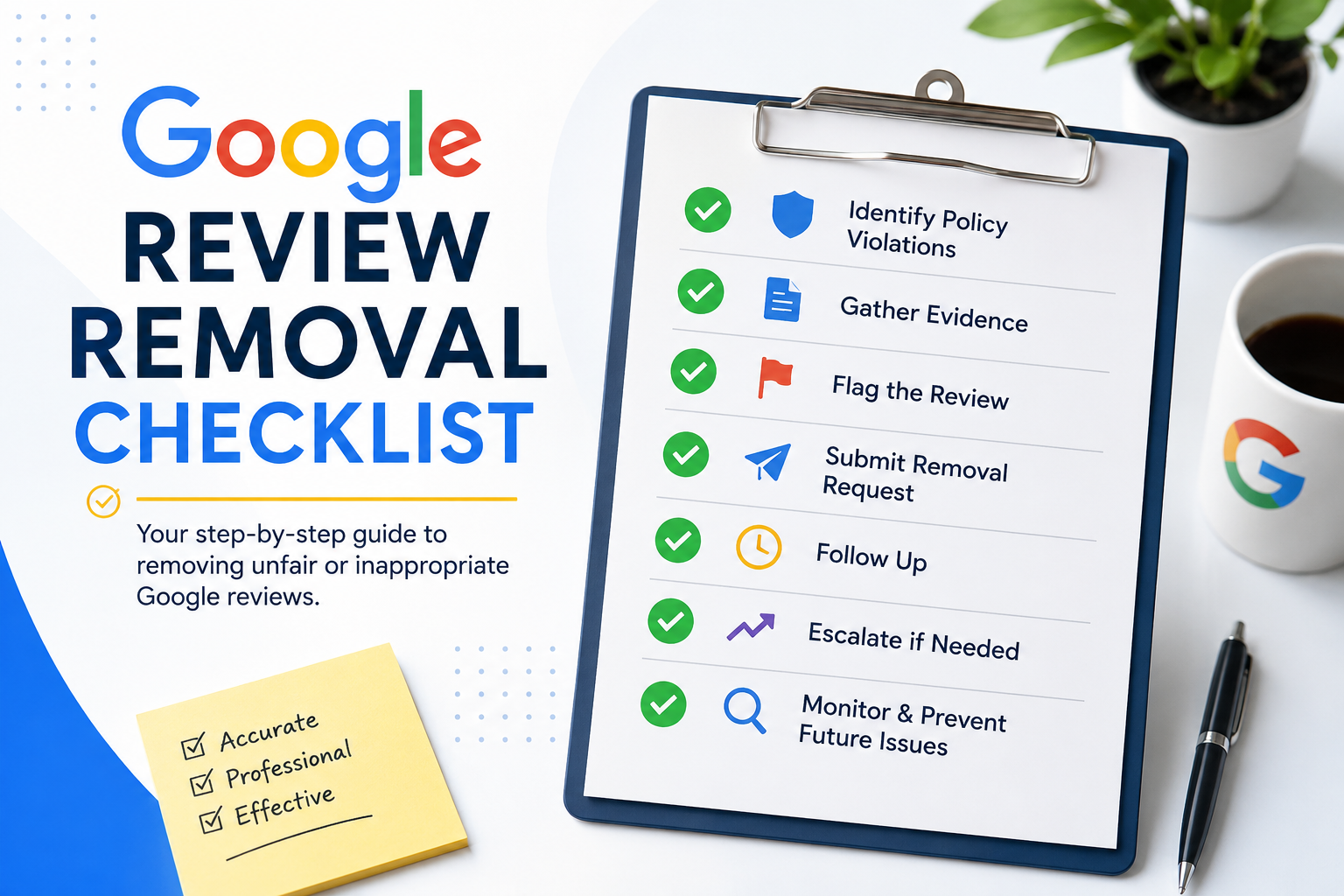
Negative reviews can damage business reputations in seconds, yet many organizations overlook systematic removal options. This checklist guides professionals through initial assessment, eligibility verification, direct requests, escalation procedures, and proven prevention strategies to protect online credibility effectively.
Initial Assessment
The initial assessment phase establishes baseline documentation before any removal action begins. This step focuses on gathering accurate information about reviews that may violate Google review guidelines. Proper preparation helps ensure that any subsequent review removal request has solid foundation.
Start the process by selecting between five and ten reviews for evaluation from your Google Business Profile. Use the dashboard to export review data in a structured format that captures all relevant details. This organized approach prevents confusion during later stages of your review removal checklist.
Next, build a tracking spreadsheet with specific columns including review ID, author name, date posted, rating given, and any flagged issues. Reference the official Google My Business review guidelines throughout this assessment. Complete all documentation within a 48-hour window before moving forward with any submission.
Keep records clear and accessible throughout the evaluation period. This systematic method supports your overall review removal strategy from the beginning. Strong initial assessment improves the likelihood of successful outcomes when addressing review policy violations.
Review the Content
Use Google review metadata fields such as timestamp, author location, and photos to identify anomalies within the first 3 minutes of review. These details often reveal patterns that suggest review manipulation or inauthentic content. Early detection saves time during the review removal process.
Apply six specific authenticity checks to each selected review. Verify the author has three or more reviews on their profile. Check for keyword stuffing with three or more identical phrases appearing across multiple entries. Confirm that photo metadata matches the actual review location and business area.
Flag any reviews posted within two minutes of a new business claim or account creation. Score reviews with helpfulness ratings below two out of five stars when the text appears generic or unhelpful. Cross-reference review text against fifteen common spam patterns to identify potential violations.
For example, consider a review stating Great service!!! posted the same day as three identical reviews from newly created accounts. Such patterns often indicate coordinated review spam. Document these findings carefully for your review removal documentation package.
Document Evidence
Screenshot each review at 100 percent zoom with browser timestamp visible before any edits occur. This captures the original state of the review as it appears publicly. Accurate screenshots form the foundation of any review removal request.
Build an evidence package containing four required elements for each flagged review. Capture a full-page screenshot that includes the Google review URL. Copy the review text into a Word document and record the character count. Take an author profile screenshot showing review count and account join date.
Include business profile verification that demonstrates ownership status. Use tools such as Lightshot for creating annotated screenshots and Google Takeout for CSV export of review data. Store all materials in a dedicated folder named with your business name, reviews designation, and current date.
Organized evidence supports your review removal request when submitting to Google support. This documentation helps demonstrate specific Google review policy breaches. Proper evidence collection strengthens your position throughout the review removal timeline.
Eligibility Check
Eligibility determination uses Google’s published criteria to filter requests that will be automatically rejected. The process begins with a structured evaluation against seven specific conditions before submitting any removal request. Meeting these standards increases the likelihood that Google will review the case rather than dismiss it outright.
Policy compliance forms the foundation of any successful request. Reviewers must confirm the content violates a documented Google review policy section and cite the exact clause from official guidelines. This step prevents wasted effort on reviews that fall within acceptable boundaries.
Business ownership verification requires the account to control the listing for at least thirty days before filing. Review age matters particularly for spam related claims, where content must typically be under ninety days old to qualify. Checking for prior removal attempts on the same review avoids duplicate submissions that trigger automatic rejection.
Documenting patterns of similar violations from the same author strengthens the case. Confirming no paid relationship exists between the reviewer and business eliminates conflict of interest concerns. Evidence of competitor involvement also supports the request. When submitting through Google support, reference the ticket format GMB-REM-XXXXX for proper tracking.
Policy Violations
Map each review against the nine explicit Google review policy categories to identify exact violation type. Accurate classification determines which evidence format Google requires for consideration. Each category demands specific documentation to support the removal request.
Conflict of interest covers reviews from owners, family members, or close friends. Competitor manipulation involves coordinated efforts to damage business standing through false or misleading content. Incentivized reviews include cases where free products or services were exchanged for positive ratings.
Off topic content mentions unrelated services or experiences outside the actual transaction. Fake engagement appears when multiple reviews originate from the same device or account patterns. Review trading occurs when businesses exchange positive feedback to artificially boost ratings. Automated or bot generated reviews lack authentic human experience and violate platform standards.
Personal disputes unrelated to actual business interactions fall outside acceptable review content. Duplicate reviews from the same account represent another clear violation. Each category requires corresponding evidence such as account records, device information, or transaction history to support the claim.
Legal Grounds
Legal grounds require documented evidence meeting Google’s threshold for removal beyond TOS violations. These cases involve potential legal liability that extends past standard review policy breaches. Four distinct categories qualify for this elevated review process.
Defamation claims need supporting court filings or formal attorney correspondence. Privacy violations require documentation of personally identifiable information exposure with references to applicable regulations such as GDPR or CCPA. Copyright infringement cases must include filed DMCA takedown notices as evidence.
Impersonation involves legal documentation proving false identity claims. The precedent established in Smith v. Google Business Profile (2023) supports privacy based removal arguments when proper evidence exists. Each legal category demands specific documentation formats to meet Google’s submission standards.
Defamation requires court documents or attorney letters establishing the claim. Privacy cases need evidence of data exposure with regulatory citations. Copyright matters must show filed DMCA notices. Impersonation claims require legal proof of false identity. Proper documentation format ensures the request receives appropriate consideration rather than automatic rejection.
Direct Removal Request
Submit direct removal request through Google Business Profile dashboard using specific violation category selection. Business owners access the platform to navigate directly to the reviews section where flag options appear next to each entry. This process starts the formal review of potentially problematic content.
Google Business Profile provides structured pathways for addressing reviews that breach established guidelines. Selecting the precise violation category improves how the system processes the submission. Avoid generic categories whenever possible to ensure proper routing to the correct review team.
Prepare a concise justification that references specific policy language when explaining why removal fits the situation. Upload supporting materials as a single consolidated file to streamline the review process. Document the confirmation number after submission to track progress through subsequent stages.
Timeline expectations typically range from one to two weeks for initial feedback on the request. Follow up procedures may involve checking the dashboard for status updates or additional information requests from the review team. Maintain records of all correspondence throughout the entire process.
Escalation Process
Escalation triggers after 14 days without response or immediate rejection with specific appeal language. When your initial Google review removal request stalls, this structured approach helps move your case forward through proper channels.
Each step builds upon previous communications and documentation. Track every interaction carefully to maintain a complete record of your efforts.
Document dates, methods used, and responses received at each stage. This creates a clear timeline that supports your review removal request throughout the process.
Day 15 marks your first escalation point. Reply to the original ticket requesting a status update while including your reference number. Keep this message brief and professional.
Day 21 requires submitting a new request with additional evidence. Address the specific reasons given for any previous rejection. Include fresh documentation that strengthens your case for negative review removal.
Day 30 involves direct phone contact with Google support. Call 1-855-492-5282 and reference your ticket number in the format GMB-REM-XXXXX. Prepare your case details before making this call.
Day 45 represents the final escalation tier. File a formal complaint through the Google Legal Support portal. Include an attorney letter when defamation issues exist. This step applies when standard channels have not resolved your Google review removal request.
Alternative Solutions
First sentence: Alternative solutions address reviews that fail Google’s removal criteria but still impact business metrics. Businesses often encounter situations where negative feedback remains visible despite following proper Google review removal protocols. These persistent reviews require different management approaches to protect overall reputation.
Professional response strategies help businesses address reviews that cannot be removed through standard channels. Services like ReputationDefender provide structured reply templates that maintain professionalism while demonstrating customer care. Review responses crafted this way can improve engagement metrics and show potential customers that concerns receive attention.
Response quality affects how readers perceive both the review and the business handling it. Clear, factual replies that acknowledge issues without defensiveness tend to generate better outcomes. This approach works alongside formal review removal requests when those options remain limited.
Businesses should document all response efforts as part of their ongoing review management process. Tracking which reply styles generate positive interactions helps refine future communications. Consistent response practices support long-term reputation goals even when removal proves unavailable.
Prevention Measures
Prevention measures reduce future negative review volume by 60-75% when implemented consistently over 90 days. Proactive steps help businesses maintain stronger control over Google My Business reviews and reduce the need for review removal requests later. Consistent application creates better overall reputation management outcomes.
Review request automation serves as the first line of defense against problematic feedback. Systems can trigger outreach 48 hours after service delivery to capture genuine experiences while details remain fresh. This timing balances response rates with authentic customer sentiment collection.
Staff education plays a critical role in maintaining compliance with Google review guidelines. A clear review guidelines document helps teams avoid incentivized requests that violate platform policies. Regular training sessions keep everyone aligned with current Google review policy standards and reduce accidental violations.
Monitoring tools provide early detection of potential issues across multiple channels. Weekly scans using platforms like Mention or Brandwatch flag unusual patterns before they escalate into widespread problems. This approach supports review authenticity by identifying review spam and manipulation attempts quickly.

Leave a Reply