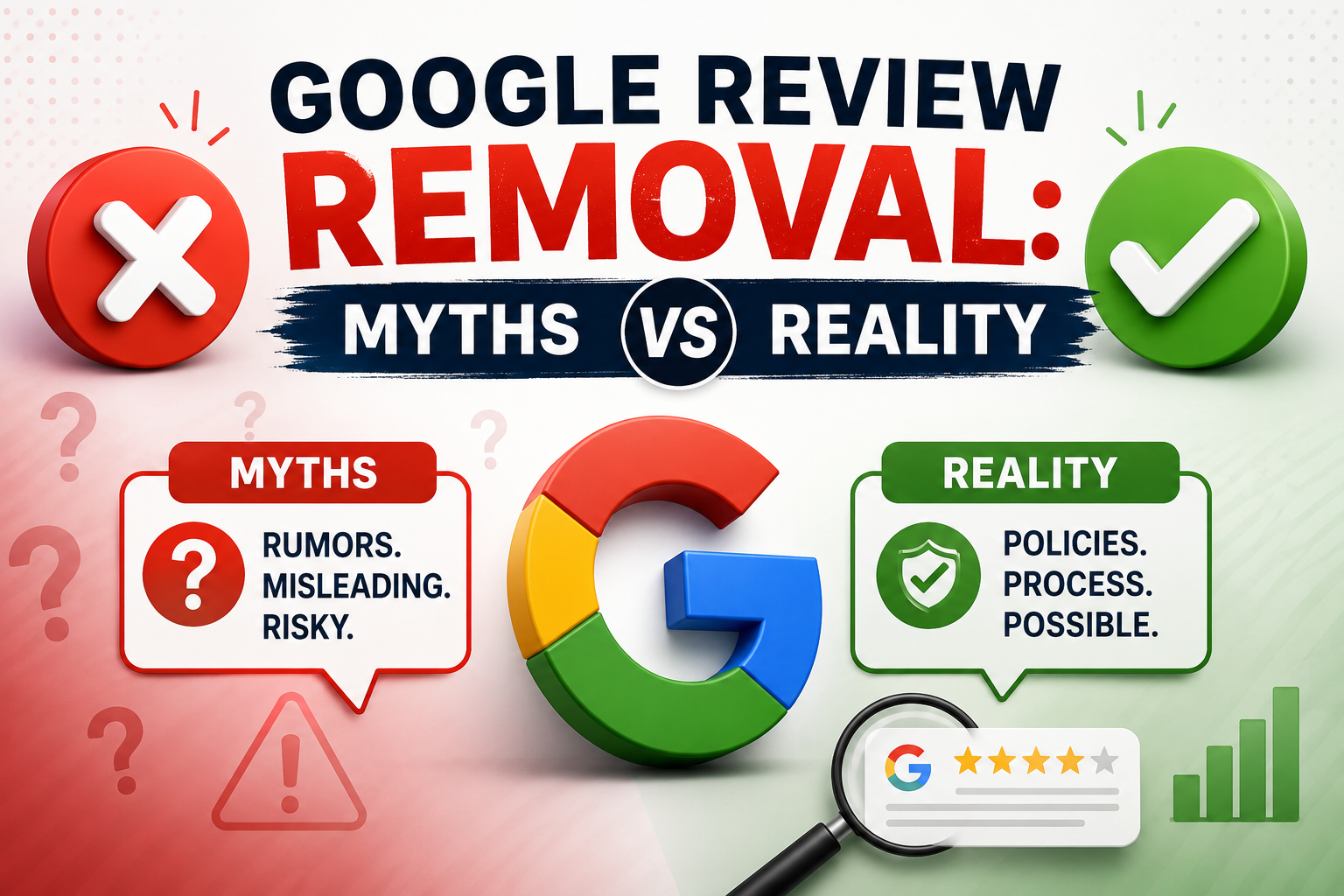
Online reviews have become one of the most influential factors in shaping a business’s reputation. Before choosing a restaurant, hiring a contractor, booking a hotel, or purchasing a product, most consumers turn to Google Reviews to evaluate their options. While positive reviews can drive growth and trust, negative reviews can significantly impact customer perception and revenue.
Because of this, many business owners search for ways to remove negative Google reviews. Unfortunately, the internet is filled with misinformation about how review removal actually works. Some believe any negative review can be deleted, while others assume businesses have no options at all.
Understanding the difference between myths and reality is essential for protecting your online reputation effectively. Let’s explore the most common misconceptions surrounding Google review removal and uncover the truth behind them.
Myth #1: Businesses Can Delete Any Negative Google Review
One of the biggest myths is that business owners have complete control over the reviews displayed on their Google Business Profile.
Reality
Businesses cannot simply delete reviews because they are negative. Google aims to provide an authentic platform where customers can share their experiences, both positive and negative. As a result, reviews are generally protected unless they violate Google’s review policies.
A negative review that reflects a genuine customer experience will likely remain visible, even if the business strongly disagrees with the feedback.
The focus should be on identifying whether the review violates Google’s guidelines rather than whether it is unfavorable.
Myth #2: Paying Google Can Remove Negative Reviews
Many people mistakenly believe that Google offers a paid service for review removal.
Reality
Google does not charge businesses to remove reviews. There is no official payment option that allows companies to erase negative feedback from their profiles.
Any individual or service claiming they can pay Google to remove reviews should be approached with caution. Google reviews are governed by policy enforcement, not financial transactions.
Removal decisions are based solely on whether a review breaches Google’s content policies.
Myth #3: Every Fake Review Will Be Automatically Removed
Business owners often assume that if a review is fake, Google will quickly detect and remove it.
Reality
While Google uses automated systems to identify suspicious activity, not every fake review is instantly flagged. Some fraudulent reviews may remain visible until they are reported and reviewed.
The review process often requires evidence showing that the reviewer was not a customer or that the content violates specific guidelines.
Although Google actively combats spam, businesses may need to submit reports and follow proper procedures before action is taken.
Myth #4: Responding to Negative Reviews Makes Things Worse
Some companies avoid responding to criticism because they fear drawing more attention to the issue.
Reality
Professional responses can actually strengthen your reputation. Potential customers often pay attention not only to the review itself but also to how the business handles complaints.
A respectful response demonstrates accountability, professionalism, and a commitment to customer satisfaction.
Even when a review cannot be removed, a thoughtful reply can help reduce its impact and reassure future customers that the business values feedback.
Myth #5: Competitors Never Leave Fake Reviews
Many business owners underestimate how frequently competitors or malicious individuals may post misleading reviews.
Reality
Although most reviews come from legitimate customers, competitor-generated reviews do occur. Google specifically prohibits conflicts of interest, including reviews intended to manipulate ratings or damage competitors.
If there is reason to believe a review was posted by a competitor, it may qualify for removal if sufficient evidence can be presented.
However, assumptions alone are not enough. Documentation and policy violations are typically required to support a successful removal request.
Myth #6: Once a Review Is Reported, It Will Be Removed Immediately
Many businesses expect instant action after flagging a review.
Reality
Review investigations take time. Google’s moderation systems evaluate reported content to determine whether it violates established policies.
Some cases are resolved quickly, while others may require additional review. In certain situations, multiple reports or escalations may be necessary.
Patience and proper documentation often play an important role in the process.
Myth #7: Review Removal Services Can Delete Any Review
Numerous companies advertise guaranteed review removal services.
Reality
No legitimate service can guarantee the removal of every review. Success depends entirely on whether the review violates Google’s policies.
Professional reputation management firms may assist by identifying policy violations, preparing evidence, submitting reports, and managing escalations. However, they cannot override Google’s rules or force removals.
Businesses should be cautious of providers making unrealistic promises or offering guaranteed outcomes.
Myth #8: Negative Reviews Always Harm Your Business
Many owners panic when they receive a one-star review, believing it will permanently damage their reputation.
Reality
Consumers understand that no business is perfect. In fact, profiles with only five-star reviews can sometimes appear less authentic.
A few negative reviews among many positive ones often make a business look more credible. What matters most is the overall rating, review volume, and how the business responds to customer concerns.
Consistently earning positive reviews can significantly outweigh occasional criticism.
Myth #9: Google Removes Reviews Simply Because They Are Unfair
Business owners frequently argue that a review is unfair or misleading and expect Google to remove it.
Reality
Google does not act as an arbitrator for customer disputes. A review may feel unfair, exaggerated, or one-sided, but that alone is not grounds for removal.
To qualify for removal, the review typically must violate policies related to spam, fake engagement, harassment, hate speech, inappropriate content, conflicts of interest, or other prohibited behaviors.
Policy violations matter far more than personal opinions regarding fairness.
Myth #10: Reputation Management Is Only About Removing Reviews
Many people view review removal as the sole solution to online reputation challenges.
Reality
Effective reputation management involves much more than removing problematic reviews. It includes encouraging satisfied customers to leave feedback, responding professionally to reviews, monitoring online mentions, improving customer experiences, and maintaining a strong digital presence.
The most successful businesses focus on building a steady stream of authentic positive reviews rather than relying solely on review removal efforts.
Final Thoughts
Google review removal is often misunderstood. While some negative reviews can be removed, the process is governed by strict policies rather than personal preference. Businesses cannot delete reviews simply because they dislike them, and no legitimate provider can guarantee universal removal.
The reality is that reputation management requires a balanced approach. Understanding Google’s guidelines, identifying policy violations, responding professionally, and consistently delivering excellent customer experiences are all critical components of maintaining a positive online presence.
Rather than focusing solely on eliminating negative feedback, businesses should prioritize building trust, encouraging genuine customer reviews, and creating experiences that naturally generate positive sentiment. In the long run, a strong reputation is built through credibility, transparency, and consistent customer satisfaction.
Frequently Asked Questions (FAQs)
1. Can Google reviews be removed?
Yes, Google may remove reviews that violate its content policies, such as fake reviews, spam, harassment, hate speech, or conflicts of interest. However, genuine negative reviews typically remain visible.
2. How long does Google review removal take?
The timeline varies. Some reviews may be reviewed within a few days, while more complex cases can take several weeks, especially if additional investigation is required.
3. Can I remove a negative Google review myself?
You can report a review through your Google Business Profile if you believe it violates Google’s policies. However, the final decision rests with Google.
4. Does Google remove reviews simply because they are unfair?
No. Google does not remove reviews solely because a business believes they are unfair or inaccurate. The review must violate specific Google content guidelines.
5. What types of reviews are most likely to be removed?
Reviews containing spam, fake engagement, offensive language, threats, harassment, impersonation, or prohibited content have a higher chance of removal if reported properly.
6. Can competitors leave fake Google reviews?
Unfortunately, yes. While Google prohibits competitor reviews intended to manipulate ratings, some still appear. If evidence exists, these reviews can be reported for policy violations.
7. Are review removal services legitimate?
Some reputation management companies provide legitimate assistance by identifying policy violations and handling the reporting process. However, no reputable service can guarantee the removal of every review.
8. Will responding to a negative review help my business?
Absolutely. A professional and respectful response demonstrates accountability and customer care, which can positively influence potential customers reading the review.
9. Can customers edit or delete their own Google reviews?
Yes. Reviewers can update, edit, or remove their own reviews at any time through their Google account.
10. What is the best way to manage a poor online reputation?
The most effective strategy is to consistently provide excellent customer experiences, encourage satisfied customers to leave reviews, respond professionally to feedback, and address policy-violating reviews when necessary.




Leave a Reply