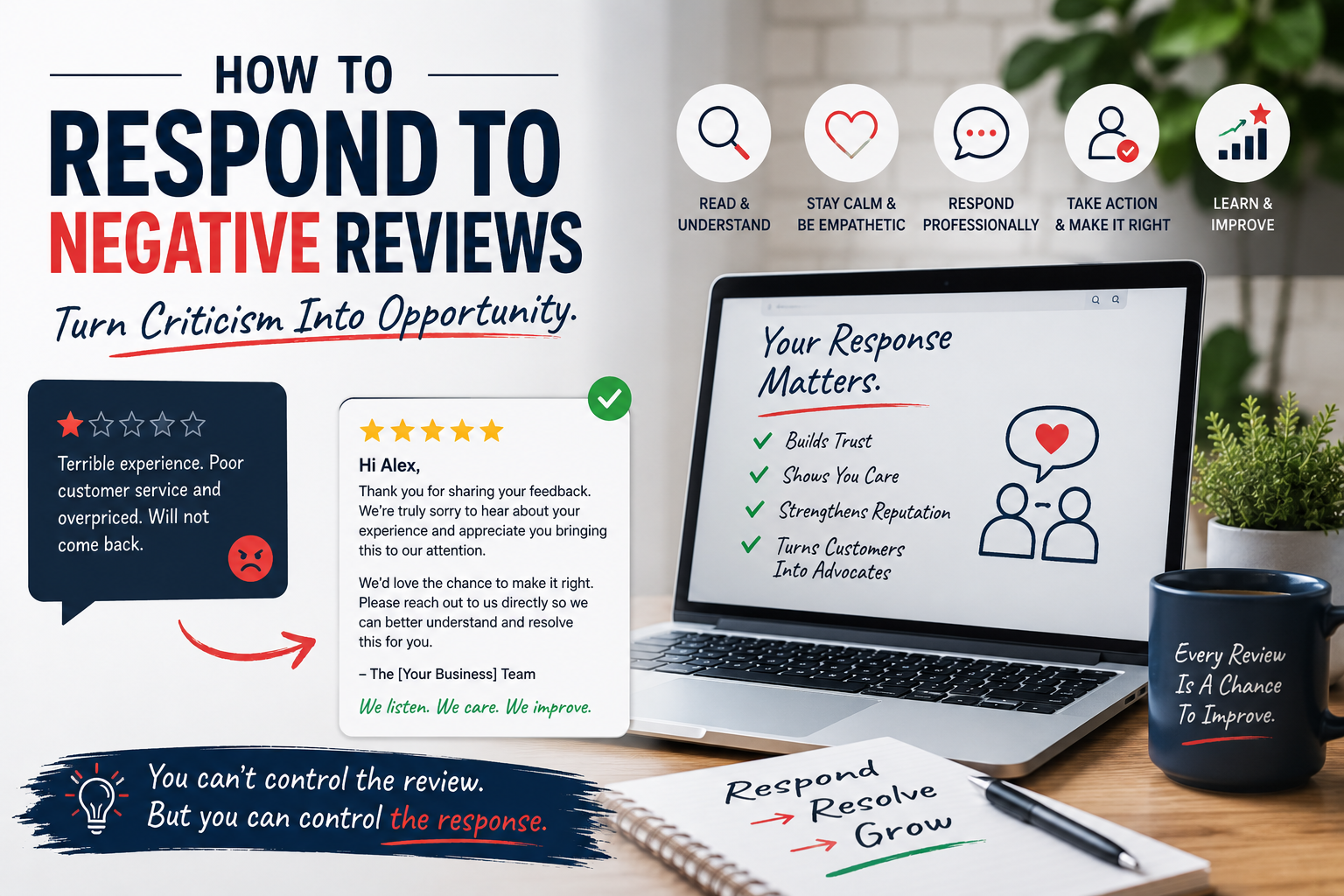
Negative reviews can significantly influence purchasing decisions and shape your brand’s reputation. Effective management requires more than quick replies-it demands preparation, strategic communication, and follow-through. This guide covers how to assess feedback, craft thoughtful responses, handle difficult situations, and convert criticism into opportunities for improvement and trust-building.
Understanding Negative Reviews
Negative reviews average 8-12% of total reviews across Google, Yelp, and TripAdvisor according to BrightLocal’s 2023 Local Consumer Review Survey. These comments often appear when expectations do not match the actual customer experience. Every business encounters this type of feedback at some point during operations.
Negative feedback can influence how potential customers view your brand online. A single critical comment may affect conversion rates and booking volumes over time. Understanding why these reviews occur helps businesses prepare effective strategies for addressing them.
Review platforms make customer opinions visible to anyone searching for services or products. This visibility means each negative review carries weight in decision making processes. Businesses that monitor feedback regularly stay ahead of emerging issues.
Response strategies require attention to detail and proper timing. Quick acknowledgment shows customers their concerns matter to your organization. Professional handling of these situations demonstrates commitment to service quality.
Common Causes and Triggers
Data from Harvard Business School shows 68% of negative reviews stem from unmet delivery expectations, 22% from product defects, and 10% from customer service interactions. Recognizing these patterns helps businesses identify areas needing improvement. Each trigger represents an opportunity to adjust operations.
Delivery delays over 3 days often result in customer complaints about timing issues. A typical review might state Package arrived four days late and missed my deadline completely. Tracking shipping times prevents these situations from recurring.
Incorrect product specifications lead to dissatisfaction when items received differ from descriptions. Customers might write Received the blue version instead of the black one shown online. Clear product details reduce confusion before purchase.
Billing errors exceeding $15 create frustration and damage trust quickly. A review could mention Charged $22 more than the advertised price on my receipt. Accurate invoicing systems help avoid these discrepancies.
Staff response time over 48 hours leaves customers feeling ignored during problems. Someone might note Waited three days for any reply to my question about the order. Faster communication improves the overall experience.
Packaging damage visible in photos prompts negative comments about product condition. A customer could describe Box arrived crushed with broken items inside. Better packing materials protect contents during shipping.
Impact on Business Reputation
Yelp-commissioned research found each additional negative star reduces revenue by 5-9% for restaurants, a single 1-star Google review drops click-through rates by 20% on average. These effects appear at different timeframes depending on response speed. Immediate action limits the damage from critical comments.
During the first 48 hours after a negative review appears, website conversions may drop by 34%. Potential customers read recent feedback before making purchasing decisions. Quick replies show active management of customer concerns.
Over 30 days without addressing issues, businesses see 18% fewer referrals from existing customers. Word spreads when problems remain unresolved for extended periods. Consistent monitoring catches issues before they compound.
Long-term effects include algorithm suppression on review platforms when negative sentiment increases. A 90-day case study of a 45-room boutique hotel showed recovery from a 2.8 to 4.1 rating after implementing targeted response strategies. The recovery required consistent attention to each customer complaint received during that period.
Preparation Before Responding
Businesses with documented response protocols handle 3.2x more reviews monthly than those without structured guidelines according to ReviewTrackers 2023 benchmark report. Pre-established guidelines create a foundation for consistent, compliant responses across all review platforms.
Without clear protocols in place, responses can vary dramatically depending on which team member replies. This inconsistency damages brand reputation and creates confusion for customers reading public interactions.
Trained teams follow the same standards whether handling a Google review, Yelp review, or TripAdvisor review. This uniformity builds trust and shows customers that feedback receives proper attention.
Documented procedures also reduce response time and minimize legal risks. Teams know exactly what to say and when to escalate issues to management.
Establish Response Guidelines
Create a 4-part template: acknowledge (1 sentence), empathize (1 sentence), solution (2 sentences max), and invitation to continue offline (1 sentence). This structure works across different review platforms while maintaining professional standards.
Google requires responses under 150 characters. The template must acknowledge the issue quickly, express understanding, offer a resolution, and provide contact details for private discussion.
Yelp allows unlimited length with a 3-paragraph structure. The first paragraph addresses the specific complaint, the second explains what action will be taken, and the third invites further communication outside the platform.
TripAdvisor permits photo inclusion when appropriate. The template follows the same 4-part structure but may reference specific service recovery steps with supporting images.
Before sending any reply, follow this 6-item pre-response checklist. Verify the booking ID, check previous interactions in the CRM system, confirm staff on duty during the incident, screenshot the review for records, log the entry in the monitoring tool, and set the response timer.
Team Training and Roles
Designate three roles: first responder (under 2 hours), reviewer (manager approval within 4 hours), and follow-up coordinator (48-hour check-in). Each position carries specific responsibilities that ensure quality control.
The 90-minute training curriculum includes role-play scenarios using actual negative reviews. Staff practice real situations to develop appropriate language and tone.
Quiz scoring covers empathy language with a minimum 85 percent required for certification. The assessment also tests platform-specific character counts and escalation triggers.
Monthly refresher sessions keep skills current. A certification tracking spreadsheet template helps managers monitor which team members have completed required training modules.
Core Response Principles
Reviews responded to within 4 hours receive 2.4x higher helpful votes than those answered after 24 hours, per BrightLocal data. Two principles guide every effective reply. First, match your empathetic tone to the review severity. Second, use ownership language that accepts responsibility without deflection.
Minor complaints need a calm acknowledgment while major issues require stronger accountability statements. Ownership language focuses on what your team will do next. This approach prevents defensive phrasing that can escalate customer frustration.
Customers expect businesses to address legitimate concerns directly. When replies shift blame or minimize the issue, readers notice immediately. Clear ownership statements rebuild trust faster than vague promises or excuses.
Each negative review presents an opportunity to demonstrate how your business handles problems. Consistent application of these principles strengthens overall reputation management across all review platforms.
Tone and Empathy
Use the FEEL framework to structure every reply. Frustration acknowledged validates the customer’s feelings. Experience validated shows you understand their specific situation. Expectation reset clarifies what happens next. Loyalty rebuilt invites future engagement.
Each sentence in your response should stay under 20 words for readability. Short sentences help customers process your message quickly. They also reduce the chance of misinterpretation during an already stressful situation.
Match your tone to the review severity using these specific phrases. For minor issues say, We apologize for the inconvenience. For moderate problems use, We understand this fell short of your expectations. For serious complaints state, We take full responsibility and have escalated this to ownership.
Additional phrases for different levels include, Thank you for bringing this to our attention and We are sorry this happened during your visit. More serious situations call for statements like, This does not reflect our usual standards or We have reviewed the details with our team. The most critical cases require, We have begun corrective steps to prevent this from recurring.
Timeliness and Ownership
Target response windows vary by review rating. Respond to 1-star reviews within 1 hour. Address 2-star reviews within 4 hours. Handle 3-star reviews or those with below-average sentiment scores within 12 hours. Faster replies show customers their feedback matters.
Create an escalation matrix for serious complaints. Send automatic Slack alerts at 30 minutes for all 1-star reviews. Require manager review at 90 minutes for unresolved issues. This structure ensures complex problems receive appropriate attention quickly.
Every public reply must include an ownership statement in the first 48 words. Sample statements include, We are sorry this experience did not meet your expectations and we are correcting the issue immediately. Another option states, This situation should never have occurred and we have taken steps to address it directly.
Clear ownership language demonstrates accountability to both the reviewer and other readers. When customers see specific actions mentioned, they feel heard. This approach improves the chances of turning negative experiences into future positive interactions.
Step-by-Step Response Framework
A 7-step framework reduces average response time from 19 hours to 3.4 hours while increasing customer satisfaction scores by 28 points. This approach creates measurable reputation recovery within 14 days when followed consistently.
The three-phase method combines assessment, public reply, and private follow-up. Each phase builds on the previous one to address concerns while protecting brand reputation.
Businesses that implement this structure report faster resolution rates. The process prevents small issues from escalating into larger reputation challenges.
Regular application of these steps helps teams respond with confidence. Staff members gain clarity on handling different types of feedback across multiple platforms.
Initial Assessment
Score each review on three metrics: legitimacy (0-10), severity (low/medium/high), and publicity risk (local mentions or viral potential). This scoring system helps prioritize which responses need immediate attention.
| Assessment Area | Verification Criteria | Risk Indicators |
|---|---|---|
| Verify Purchase | Yes or No with order number attached | Missing transaction details |
| Detect Fake Reviews | Account age under 30 days | Five or more 1-star reviews in 48 hours |
| Identify Legal Exposure | HIPAA, ADA, or discrimination claims | References to protected information |
Use a Google Sheets template with conditional formatting that auto-flags high-risk reviews. The tool highlights patterns that require extra attention from management.
Teams should document each assessment outcome. Records help track patterns across different review platforms over time.
Public Reply Structure
Follow 5-part public structure: greeting plus name, specific issue acknowledgment, ownership statement, concrete solution with timeline, and call-to-action for offline contact. This format shows customers their concerns receive proper attention.
For 1-star reviews, include a legal disclaimer at the end of your 180-word response. Address the core complaint while protecting your business from potential liability issues.
2-star reviews work well with a 120-word reply that includes a discount offer. The compensation demonstrates your commitment to making things right.
3-star reviews need only an 80-word response with a next-visit invitation. These customers often respond positively to simple gestures of appreciation.
A/B testing on follow-up email subject lines can improve open rates from 31 percent to 67 percent. Test variations like Quick question about your visit against We value your feedback to find what works best for your audience.
Private Follow-Up Options
Offer three escalation tiers: email within 24 hours, phone call within 48 hours, or in-person meeting for issues exceeding $200 in claimed damages. Matching the response method to the situation shows appropriate care for each case.
Create a follow-up email sequence with four templates. Start with immediate acknowledgment, then move to solution proposals that include compensation options like a $25 gift card, 20 percent discount, or free add-on service.
Send a satisfaction check at day 7 to gauge progress. Request a review update at day 14 if the customer seems satisfied with the resolution.
Connect this process to your CRM system for better tracking. Salesforce and HubSpot both support automated sequences that maintain consistency across your team.
Document every private interaction in your customer records. Complete notes help future staff members understand the full context of each situation.
Handling Specific Scenarios
Three scenario types account for 91% of negative reviews: factual disputes (34%), emotional outbursts (29%), and process failures (28%). Response approaches differ based on whether claims hold merit and how intense the emotion appears. This segmentation helps teams allocate time and resources effectively.
Factual disputes require documentation and platform coordination. Emotional outbursts need de-escalation before any resolution attempts. Process failures often benefit from immediate compensation offers paired with corrective action.
Review platforms each handle disputes differently, so teams should understand the specific procedures for Google, Yelp, and other major sites. Matching the response style to the scenario type improves outcomes across customer service interactions.
Unfair or False Claims
When evidence contradicts claims (booking records, timestamps, photos), respond factually in first paragraph then invite platform review. Verifiable details form the foundation of any reply to unfair accusations. Presenting records without emotional language keeps the exchange professional.
Teams should gather order numbers, dates, times, and supporting documentation before drafting a response. This preparation allows for clear statements that address specific points raised in the review. The goal remains correcting the record rather than assigning blame.
Platform removal requests work best when evidence gets submitted promptly. For Google, use the business profile support form and attach relevant records. Yelp provides a similar reporting option through their review management tools. Documentation strengthens these requests significantly.
Companies achieve better results when they submit evidence within 72 hours of identifying false claims. The request should focus on policy violations rather than disagreement with opinions. Clear communication with the platform increases the likelihood of review removal.
Angry or Abusive Reviews
Abusive language appears in 4% of negative reviews. 78% of these reviewers become repeat customers when de-escalated professionally within 6 hours. Escalation protocols help teams respond appropriately to varying levels of hostility.
Mild profanity warrants a standard response that acknowledges frustration without engaging the tone. Personal attacks require manager involvement to maintain professionalism. Threats demand legal consultation before any public reply occurs.
Certain phrases increase tension rather than reduce it. Avoid saying calm down or that’s not true because these statements often feel dismissive. Instead, use language that validates the customer’s experience while steering toward resolution.
Training materials should include replacement phrases that maintain professionalism under pressure. Quick response times matter when emotions run high. Professional handling transforms difficult situations into opportunities for improved customer relationships.
Legitimate Complaints
Legitimate complaints that receive compensation offers above $30 have 3.8x higher chance of updated positive review within 30 days. Tiered compensation helps teams address issues proportionally to their impact. Clear guidelines prevent inconsistent decision making.
Minor issues like wrong orders or slow service typically warrant $10 to $25 in compensation. Moderate problems involving significant delays or damaged products require $50 to $100. Severe cases involving safety concerns or major financial loss call for $150 or full refunds.
Sample language should explain the compensation clearly and link it to specific corrective actions. Amounts exceeding $75 need supervisor approval to maintain consistency across locations. Documentation of each decision supports future reference and training.
Compensation works best when paired with genuine acknowledgment of the problem. Customers appreciate both the resolution and the recognition that their feedback matters. This combination strengthens loyalty even after negative experiences.
Turning Negatives Into Positives
Businesses that publicly document service recovery achieve 41% higher trust scores than those that respond privately, according to Wharton School research. Transparent recovery shows customers that problems receive attention and get resolved. This approach builds credibility that private communication cannot match.
Visible improvements create measurable trust signals. When companies share how they addressed specific issues, they demonstrate accountability to everyone watching. Potential customers see evidence of real change rather than empty promises.
Detractors often become advocates when they witness genuine follow-through. A customer complaint handled openly can lead to stronger loyalty than if the issue never occurred. Public documentation turns negative experiences into proof of reliability.
Reputation management benefits from this transparency. Each resolved issue contributes to a pattern of responsive service. Over time, this pattern attracts customers who value businesses that own their mistakes.
Service Recovery Tactics
Implement the LAST method: Listen without interruption, Apologize specifically, Solve with timeline, Thank the customer for feedback. This framework provides structure during difficult conversations. Feedback handling improves when teams follow consistent steps.
Several recovery options deliver different results based on cost and impact. A handwritten note costs around three dollars and brings a twelve percent return rate. Expedited replacement shipping runs approximately eighteen dollars and achieves a thirty-four percent return rate.
Manager phone calls cost nothing yet generate a twenty-eight percent return rate. Future credits of forty dollars produce a fifty-one percent return rate. VIP treatment on the next visit costs nothing and reaches a sixty-seven percent return rate.
Track these outcomes quarterly using a simple spreadsheet. Record each recovery type, associated cost, and resulting customer retention. This data helps teams choose the most effective response for each situation.
Showcasing Improvements
Post-recovery update posts on Google Business Profile receive 2.9x more views than standard replies when they include specific process changes. Review management benefits when updates show concrete action. Customers want evidence that their feedback led to change.
Three types of showcases work well for demonstrating progress. Process change announcements include details about new staff training protocols along with photos of completed certificates. Policy updates explain adjustments like extending return windows from fourteen to thirty days.
Staff recognition posts highlight employees who handled complaints effectively. These features show that the business values team members who resolve issues well. Each showcase should include before and after metrics.
Post updates on a consistent schedule to maintain engagement. Share one improvement showcase per resolved issue within one week of completion. This timing keeps the information relevant and visible to customers monitoring the situation.
Monitoring and Learning
Systematic monitoring turns scattered customer complaints into clear patterns that guide real operational improvements. Quarterly reviews help businesses spot recurring issues before they affect more customers.
Weekly review analysis reduces repeat complaint categories by 34% quarter-over-quarter per Podium 2023 customer success data. Teams that check feedback regularly catch problems early and adjust their approach accordingly.
Consistent tracking also reveals which response strategies work best for different types of negative feedback. Staff members learn from past interactions and refine their customer service skills over time.
This process creates a cycle where each complaint contributes to better service delivery. Businesses build stronger reputation management practices through steady attention to review trends.
Review Analytics
Track five KPIs weekly: average response time, star rating trend, category frequency (cleanliness, staff, value), sentiment score, and repeat reviewer rate. These metrics give teams a clear picture of their customer experience performance.
Three analytics tools support this work. Birdeye starts at $99 per month and includes auto-categorization features. Podium costs $129 per month and tracks response time across platforms. A free option combines Google Sheets with Data Studio for custom dashboards.
Sample dashboards display complaint categories in a pie chart alongside a 90-day sentiment line graph. Annotations on the graph mark when process changes were implemented to show their impact on future reviews.
Regular analysis helps teams understand which issues appear most often. This information guides decisions about where to focus improvement efforts first.
Preventing Future Issues
Root cause analysis of 200 negative reviews across 12 businesses revealed 63% were preventable through staff training or process automation. This finding shows the value of proactive planning.
A quarterly prevention plan focuses on three areas. Staff retraining covers the top three complaint categories through two-hour sessions held monthly. Process automation adds delivery confirmation texts that reduce logistics complaints. Preemptive outreach reaches customers with at-risk bookings identified by booking source or special requests.
A 90-day prevention calendar helps teams stay on schedule with these activities. Each month includes specific training topics and process checks tied to common review themes.
Regular prevention work reduces the number of negative reviews that require responses. Teams spend less time on complaint resolution and more time on positive customer engagement.
Legal and Ethical Considerations
Businesses must follow three core legal pillars when handling feedback. These pillars include truthful responses, privacy compliance, and proper incentivization disclosure.
FTC guidelines require disclosure of any material compensation offered in exchange for review updates; violations carry penalties up to $43,792 per instance. These rules protect companies from regulatory action while maintaining customer trust.
Accurate information in every reply protects your brand from legal challenges. Clear communication also demonstrates respect for both customers and oversight bodies.
Privacy laws require careful handling of personal information in public responses. Businesses should avoid sharing details that could identify individuals without explicit permission.
Disclosure and Transparency
When offering compensation for updated reviews, include exact disclosure language: “We offered [customer] a $25 gift card in appreciation for their feedback; this did not influence their updated review.” This statement keeps interactions honest and compliant.
Three standard disclosure templates help businesses stay transparent. Monetary compensation requires clear mention of payment amounts. Free service disclosures should note any complimentary offerings. Future discount disclosures must state the exact benefit provided.
State requirements vary across different regions. California demands specific language around material connections. New York requires clear statements about review authenticity. Florida focuses on consumer protection disclosures in all promotional content.
International rules add another layer of compliance. UK GDPR requires consent for data processing in review responses. EU consumer law demands transparency about any commercial relationships that might influence feedback.
A compliance checklist supports ongoing legal adherence. Review disclosure language quarterly with legal counsel. Document all compensation offered to customers. Update templates when regulations change in your operating regions.

Leave a Reply