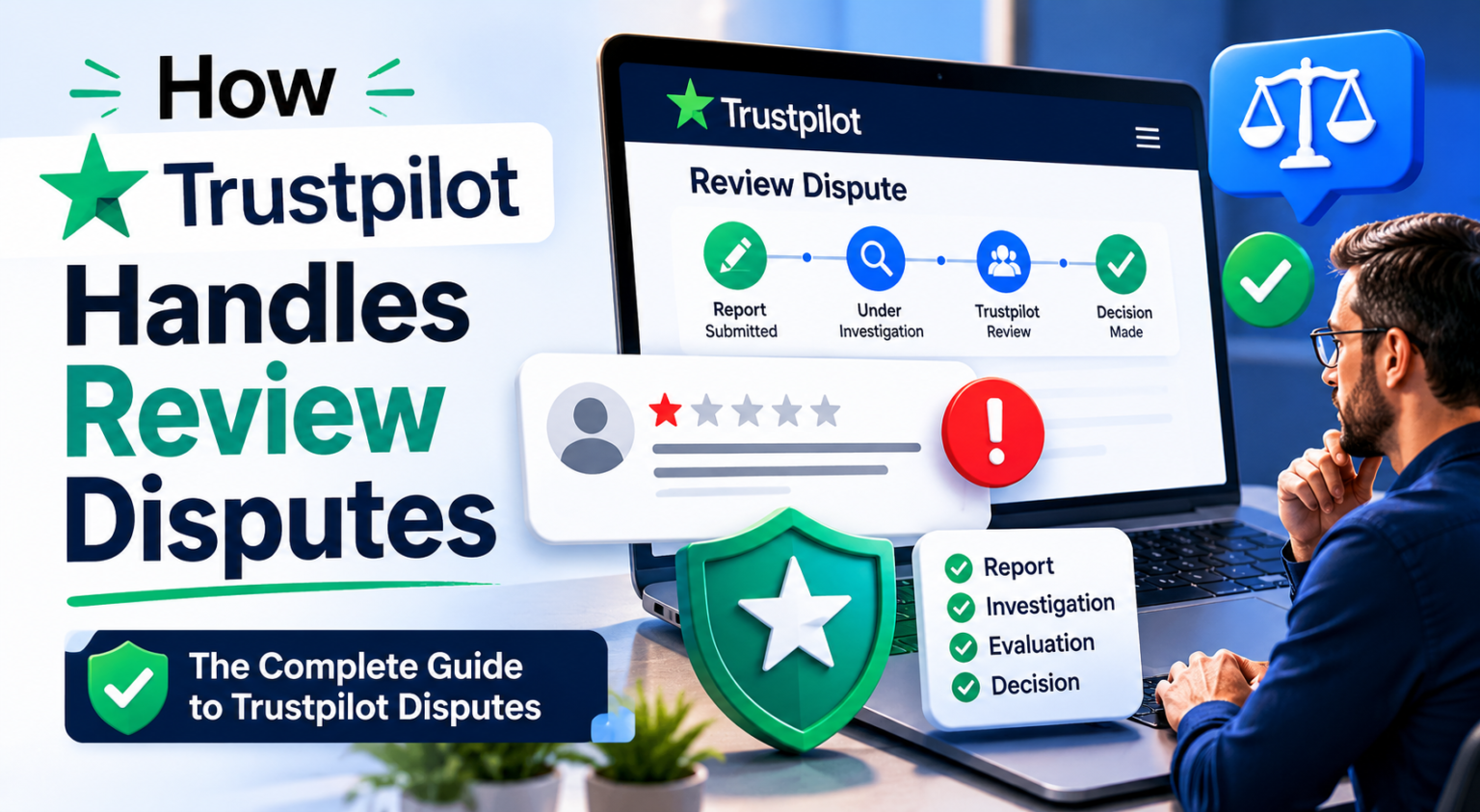
Trustpilot is a popular review platform where customers can share their experiences with businesses. These reviews can help people decide whether to trust a company, buy a product, or use a service. Because reviews affect reputation, businesses sometimes want to dispute reviews they believe are fake, unfair, harmful, or against platform rules.
Trustpilot does not remove reviews only because a business dislikes them. A review must break Trustpilot’s guidelines or fail verification checks before it may be removed. The goal is to protect honest customer feedback while also giving businesses a way to report reviews that may be fake or policy-violating.
What Is A Review Dispute On Trustpilot?
A review dispute happens when a business reports or challenges a review on Trustpilot. This usually means the business believes the review is not genuine, includes harmful content, or does not follow Trustpilot’s rules.
For example, a business may dispute a review if:
- The reviewer was never a real customer
- The review includes personal information
- The review contains hate speech or threats
- The review is spam or promotional
- The review is about the wrong company
- The review includes false or misleading details
- The review is written by a competitor
- The review is copied from another platform
Trustpilot then reviews the report and decides whether the review should stay online, be edited, or be removed.
Why Trustpilot Has Review Dispute Rules
Trustpilot needs to balance two sides. Customers should be free to share real experiences, even if those experiences are negative. At the same time, businesses should be protected from fake reviews, spam, abuse, or unfair attacks.
Without dispute rules, fake reviews could damage businesses. But if businesses could remove any negative review, customers would lose trust in the platform.
That is why Trustpilot usually checks whether the review breaks specific rules instead of removing it simply because it is negative.
What Types Of Reviews Can Be Disputed?
Businesses can dispute reviews that may violate Trustpilot’s guidelines.
Common reasons include:
1. Fake Or Non-Genuine Reviews
A business may report a review if it believes the reviewer never had a real experience with the company. Trustpilot may ask the reviewer to provide documentation or proof of experience.
2. Reviews With Personal Information
Reviews should not expose private details such as phone numbers, addresses, emails, payment details, or sensitive personal data. If a review includes private information, it may be flagged.
3. Harmful Or Offensive Content
Reviews that include threats, hate speech, harassment, abusive language, or discriminatory comments may violate platform rules.
4. Conflict Of Interest Reviews
A review may be disputed if it appears to come from a competitor, employee, former employee, or someone with a personal interest in damaging or promoting the business.
5. Spam Or Promotional Content
Reviews that include advertising, unrelated links, repeated text, or promotional messages may be considered spam.
6. Wrong Company Reviews
Sometimes customers accidentally review the wrong business. If the review clearly refers to another company, the business can report it.
Key Points
| Dispute Reason | Possible Trustpilot Action |
|---|---|
| Fake review | May ask reviewer for proof |
| Personal information | May request edit or remove content |
| Offensive content | May remove if it violates rules |
| Wrong company | May move or remove review |
| Spam content | May remove review |
| Genuine negative review | Usually remains online |
How Trustpilot Reviews A Dispute
When a business reports a review, Trustpilot checks the reason for the dispute. The review may be investigated by Trustpilot’s systems or content integrity team.
In some cases, Trustpilot may contact the reviewer and ask for more information. The reviewer may need to provide proof that they had a real experience with the business. This proof could include an order number, invoice, booking confirmation, email, or other relevant document.
If the reviewer provides enough proof and the review follows the rules, the review may stay online. If the reviewer does not respond or cannot prove the experience, Trustpilot may remove the review.
What Happens To The Review During A Dispute?
Depending on the issue, the review may stay visible while Trustpilot investigates. In some cases, Trustpilot may temporarily hide the review while asking the reviewer to make changes or provide proof.
If the issue is small, such as personal information or inappropriate wording, the reviewer may be asked to edit the review. If the review is edited correctly, it may remain published.
If the issue is serious or cannot be fixed, the review may be removed.
Can Businesses Remove Reviews Directly?
No. Businesses cannot directly delete Trustpilot reviews. They can only report reviews that they believe violate guidelines.
Trustpilot makes the final decision. This helps keep the platform fair and prevents businesses from deleting honest negative feedback.
What If The Review Is Negative But Genuine?
A negative review is not automatically a policy violation. If the customer had a real experience and shares their opinion without breaking rules, Trustpilot may keep the review online.
In this situation, the best option is to respond professionally.
A good response should:
- Thank the reviewer
- Stay calm
- Avoid arguments
- Address the concern
- Offer support
- Invite the customer to contact the business
- Show future customers that the business cares
A professional reply can reduce the impact of a negative review.
How Businesses Should Handle Trustpilot Disputes
Businesses should be careful when disputing reviews. Reporting every negative review can look unprofessional and may not lead to removal.
Before reporting, check whether the review clearly breaks a rule. Collect evidence such as order records, customer communication, screenshots, or proof that the reviewer is not a customer.
Use clear and factual language when submitting a dispute. Avoid emotional statements like “This review is unfair” or “This is damaging our business.” Instead, explain the exact reason.
For example:
“We cannot match this reviewer to any customer record, order number, or support interaction. The review also mentions a service we do not provide.”
This type of explanation is more useful during review checks.
What Reviewers Should Know
Reviewers should make sure their reviews are honest, clear, and based on a real experience. They should avoid posting private information, abusive language, false claims, or unrelated content.
If Trustpilot contacts a reviewer for proof, the reviewer should respond with valid information. If they do not respond, the review may be removed.
Tips To Avoid Review Disputes
Businesses can reduce disputes by improving customer communication and review management.
Useful steps include:
- Keep customer records organized
- Respond to reviews quickly
- Ask genuine customers for honest feedback
- Avoid fake or paid reviews
- Do not pressure customers to leave only positive reviews
- Handle complaints before they become public
- Monitor Trustpilot regularly
- Report only clear policy violations
A strong review profile with many genuine reviews can reduce the impact of unfair or fake reviews.
FAQs
1. Can a business delete a Trustpilot review?
No. A business cannot directly delete a Trustpilot review. It can only report the review if it believes the review violates Trustpilot’s guidelines.
2. Does Trustpilot remove negative reviews?
Trustpilot does not remove reviews just because they are negative. A negative review may stay online if it is based on a genuine experience and follows the rules.
3. What happens if a reviewer cannot prove their experience?
If Trustpilot asks for proof and the reviewer cannot provide it, the review may be removed.
4. Can a review be edited instead of removed?
Yes. If the issue can be fixed, such as removing personal information or changing wording, Trustpilot may allow the reviewer to edit the review.
5. What should a business do if a review stays online?
If the review stays online, the business should respond professionally, explain its side politely, and offer to resolve the issue.
Final Thoughts
Trustpilot handles review disputes by checking whether a review follows its guidelines. The platform tries to protect both honest customer opinions and businesses affected by fake, harmful, or policy-violating reviews.
Businesses cannot remove reviews directly. They must report reviews with valid reasons and provide clear evidence when possible. If the review is genuine and follows the rules, it will usually remain online.
The best approach is to report only real violations, respond professionally to negative feedback, and build a strong profile with genuine customer reviews.

Leave a Reply