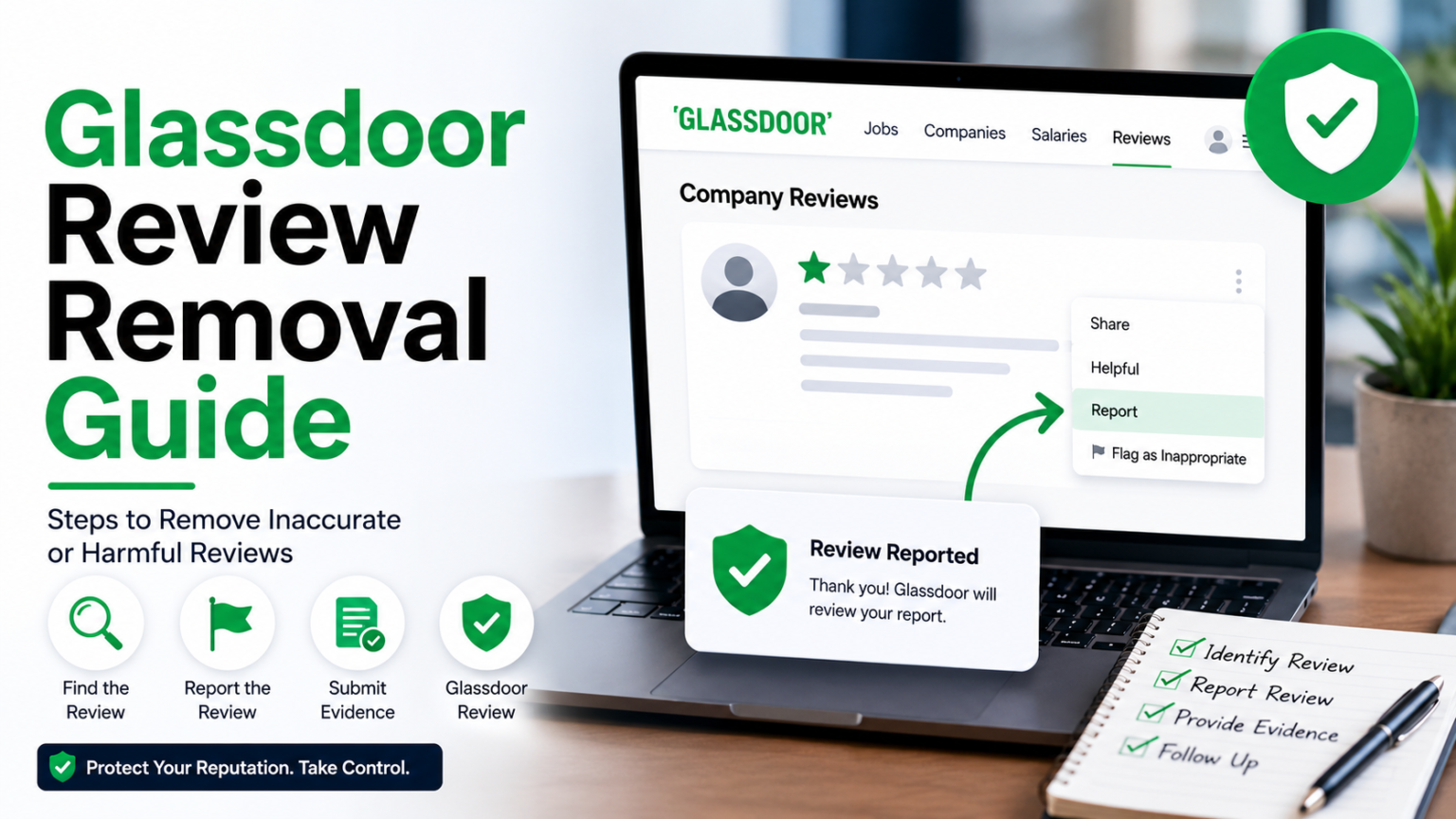
Glassdoor is a popular platform where employees and former employees can share reviews about companies, salaries, interviews, and workplace experiences. These reviews can influence job seekers, employers, and brand reputation. A strong Glassdoor profile can help a company attract talent, while negative or harmful reviews can create concern among candidates.
However, not every negative review can be removed. Glassdoor generally allows people to share honest workplace opinions, even if the feedback is critical. A review may be removed only if it violates Glassdoor’s community guidelines or content policies.
This guide explains how Glassdoor review removal works, what types of reviews may be removed, and what employers can do when a review is negative but allowed.
What Is Glassdoor Review Removal?
Glassdoor review removal means asking Glassdoor to take down a review that violates its rules. Employers cannot directly delete reviews from their company profile. They can only flag or report reviews for Glassdoor to review.
Glassdoor then checks whether the review breaks its guidelines. If it does, the review may be removed. If it does not, it may stay online.
This process helps balance two things: employees’ ability to share workplace experiences and employers’ right to protect themselves from false, abusive, or policy-violating content.
Can Employers Delete Glassdoor Reviews?
No. Employers cannot delete Glassdoor reviews themselves. This is important because review platforms are designed to show independent feedback.
If employers could delete every negative review, job seekers would not trust the platform. That is why Glassdoor decides whether a review should stay or be removed.
Employers can flag reviews, provide reasons, and explain why the review violates policy. But the final decision belongs to Glassdoor.
What Types Of Glassdoor Reviews Can Be Removed?
A review may be removed if it violates Glassdoor’s rules. While every case is reviewed individually, common violations may include the following.
1. Reviews With Personal Information
Glassdoor may remove reviews that reveal private or identifying information about individuals. This may include phone numbers, home addresses, personal emails, medical details, financial details, or other sensitive information.
Reviews should focus on workplace experience, not expose private details about employees, managers, or coworkers.
2. Threats Or Harassment
Reviews that include threats, bullying, harassment, hate speech, or abusive attacks may violate platform rules. Strong criticism may be allowed, but direct threats or harmful language may not be.
3. False Or Misleading Information
If a review contains claims that are clearly false or misleading, the employer may report it. However, proving false information can be difficult because many reviews are based on personal opinions.
Employers should provide clear evidence if they believe a review includes false claims.
4. Conflict Of Interest
A review may violate rules if it is posted by someone who is not eligible to review the company or has a conflict of interest. For example, a competitor or someone with no real connection to the workplace may post a review to damage the company.
5. Spam Or Promotional Content
Reviews that include advertising, links, repeated text, promotional content, or irrelevant messages may be removed as spam.
6. Reviews About The Wrong Company
Sometimes a reviewer may accidentally post a review on the wrong company profile. If the review clearly refers to another business, the employer can report it.
7. Confidential Or Legal Information
Reviews that reveal confidential business information, trade secrets, legal documents, or sensitive internal details may be eligible for removal if they violate policy.
Simple Comparison
| Review Issue | Can It Be Reported? |
|---|---|
| Personal information | Yes |
| Threats or harassment | Yes |
| Spam content | Yes |
| Wrong company review | Yes |
| Confidential details | Yes |
| Genuine negative opinion | Usually no |
How To Report A Glassdoor Review
If you believe a review violates Glassdoor’s guidelines, follow these steps.
Step 1: Read The Review Carefully
Before reporting, check whether the review is truly policy-violating. A review being negative, harsh, or uncomfortable does not always mean it can be removed.
Look for clear issues such as personal information, threats, spam, false claims, confidential details, or wrong company references.
Step 2: Collect Evidence
Save a screenshot of the review and note the date, reviewer details, job title if shown, and exact content that violates policy.
If the review includes false information, gather documents or records that support your claim. If it mentions the wrong company, collect proof that the details do not match your business.
Step 3: Flag The Review
Glassdoor usually provides a way to flag or report reviews that may violate guidelines. Use the reporting option and choose the most accurate reason.
Do not submit vague complaints like “This review is unfair.” Instead, explain the exact policy issue.
Step 4: Submit A Clear Explanation
Your explanation should be short, factual, and professional.
Example:
“This review includes the personal phone number of an employee, which appears to violate privacy guidelines.”
Another example:
“This review appears to refer to another company because it mentions a location and service we do not operate.”
Step 5: Wait For Glassdoor’s Review
After you report the review, Glassdoor will evaluate it. If the review violates guidelines, it may be removed or edited. If it follows the rules, it may remain online.
Review times can vary, so be patient and avoid submitting repeated reports without new information.
What If Glassdoor Does Not Remove The Review?
If Glassdoor decides the review does not violate its rules, it may stay online. In that case, the best approach is to respond professionally.
A thoughtful employer response can show job seekers that your company listens and cares about feedback.
Your response should:
- Thank the reviewer
- Stay calm
- Avoid personal attacks
- Address the concern generally
- Share improvements if relevant
- Invite further communication
- Keep the tone professional
Example Response To A Negative Glassdoor Review
“Thank you for sharing your feedback. We are sorry to hear that your experience did not meet expectations. We take employee feedback seriously and are always working to improve communication, support, and workplace culture. We encourage current or former employees to reach out to HR so we can better understand and address their concerns.”
This type of response shows maturity and professionalism.
What Employers Should Not Do
Employers should avoid actions that can make the situation worse.
Do not:
- Attack the reviewer
- Reveal employee identity
- Share private HR details
- Threaten legal action publicly
- Ask employees to post fake positive reviews
- Report every negative review without reason
- Offer rewards for positive reviews
- Argue emotionally in public responses
These actions can damage employer branding and may reduce trust.
How To Improve Your Glassdoor Reputation
Review removal is only one part of reputation management. A better long-term strategy is to build a strong and honest employer brand.
Useful steps include:
- Improve employee communication
- Respond to feedback professionally
- Encourage genuine employee reviews
- Fix repeated workplace concerns
- Keep company profile updated
- Share company culture and benefits
- Highlight career growth opportunities
- Train managers to handle feedback
- Conduct internal employee surveys
- Address issues before they become public
When employees feel heard, they are more likely to leave balanced and fair reviews.
Can Legal Action Remove A Glassdoor Review?
Legal action may be possible in serious cases involving defamation, threats, confidential information, or false harmful claims. However, legal action should be used carefully.
Many reviews are opinions, and opinions may be protected depending on the law. Before taking legal steps, speak with a qualified lawyer.
In many cases, a professional response and employer branding strategy may be more effective than legal action.
Tips For Handling Glassdoor Reviews
Here are some practical tips:
- Monitor your Glassdoor profile regularly
- Respond to reviews in a calm tone
- Report only clear policy violations
- Keep evidence before flagging
- Avoid emotional replies
- Use feedback to improve workplace culture
- Encourage honest reviews from real employees
- Update your company profile with accurate information
- Track repeated themes in reviews
The goal is not to remove every negative review. The goal is to create a fair and trustworthy employer image.
FAQs
1. Can a company remove a Glassdoor review?
No. A company cannot directly remove a Glassdoor review. It can only report the review if it violates Glassdoor’s guidelines.
2. Does Glassdoor remove negative reviews?
Glassdoor does not remove reviews only because they are negative. A review must break platform rules to be removed.
3. What kind of Glassdoor reviews can be reported?
Reviews with personal information, threats, harassment, spam, confidential details, wrong company references, or clear policy violations can be reported.
4. What should I do if Glassdoor keeps the review online?
Respond professionally, address the concern generally, and focus on improving your employer brand.
5. Can employers ask employees for positive Glassdoor reviews?
Employers should only encourage honest and voluntary reviews. They should not pressure employees or offer rewards for positive feedback.
Final Thoughts
Glassdoor review removal is possible only when a review violates platform guidelines. Employers cannot delete reviews directly, and genuine negative opinions may remain online.
The best approach is to report clear violations, provide factual evidence, and respond professionally when reviews stay visible. Over time, a strong employer brand, honest communication, and better workplace practices can improve your Glassdoor reputation naturally.

Leave a Reply