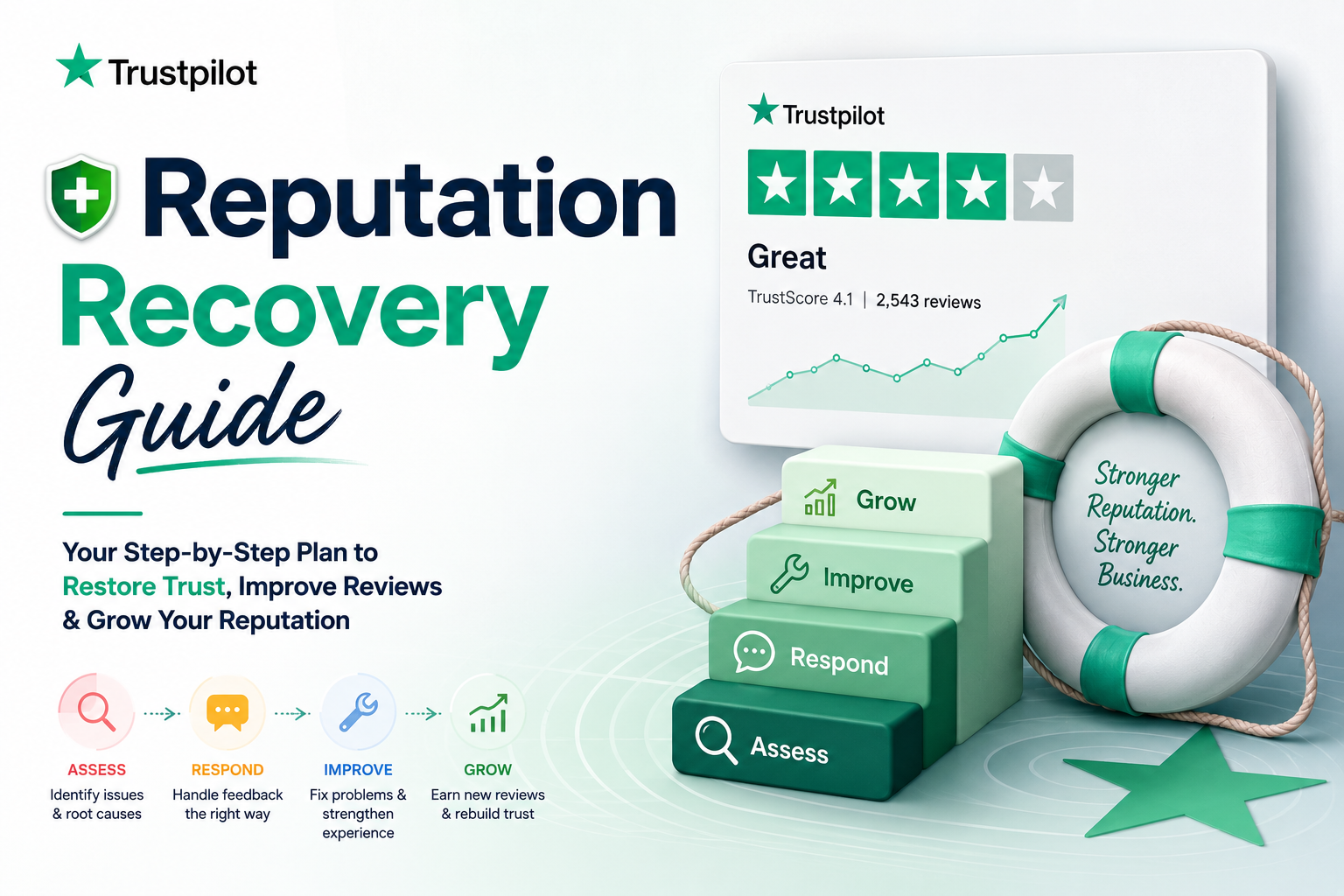
In today’s competitive marketplace, a single negative Trustpilot review can significantly impact customer acquisition and brand credibility. Understanding Trustpilot’s review policies, identifying potential fakes, and mastering response strategies are essential skills for businesses facing reputation challenges. This guide explores immediate recovery tactics, including review removal requests and ethical response frameworks, alongside proactive approaches for generating authentic positive feedback.
Understanding Trustpilot Reviews
Trustpilot enforces 15 specific review guidelines covering authenticity verification, disclosure requirements, and incentive restrictions. These rules help businesses maintain accurate customer feedback while protecting against manipulation attempts. Companies need to understand these standards for effective reputation management.
Trustpilot’s three core review policies form the foundation of their platform integrity system. Reviews must come from verified purchasers with email verification required before submission. Incentivized reviews must include clear disclosure such as This review was collected as part of a promotion.
Companies cannot offer compensation tied to star ratings under any circumstances. This prevents artificial inflation or deflation of scores. Trustpilot removed 1.2 million fake reviews in 2023 through their verification processes.
The verification badge system displays trust signals next to authentic reviews. These badges appear when reviews pass all authenticity checks and meet platform standards. Customers rely on these indicators when evaluating business credibility.
Review Policies and Guidelines
Trustpilot’s October 2023 policy update requires all reviews to pass a 7-point authenticity verification process. This comprehensive system examines multiple data points before approving any submission. Businesses benefit from understanding these criteria for successful reputation recovery.
The verification process includes email domain matching against purchase records to confirm legitimate transactions. Review submission IP address analysis detects coordinated posting patterns from single locations. Language pattern detection identifies AI-generated content that violates platform rules.
Photo and video evidence validation confirms visual proof matches the reviewed experience. Multiple review detection from the same device prevents single users from manipulating scores. Incentive disclosure verification ensures proper transparency when promotions are involved.
Purchase date correlation checks verify reviews align with actual transaction timelines. Trustpilot reports that 12 percent of submitted reviews fail this verification process. Companies can improve their Trustpilot score by focusing on genuine customer experiences rather than artificial review generation.
Identifying Fake or Unfair Reviews
Use Trustpilot’s review authenticity report feature to flag suspicious reviews within their platform dashboard. This tool allows businesses to report potential violations directly to the authenticity team. Quick action helps protect brand reputation from manipulation attempts.
Five specific red flags indicate potential fake or unfair reviews on your profile. Generic language patterns appearing in multiple reviews within 48 hours suggest coordinated posting. Review text matching competitor review templates can be identified through comparison tools like Copyscape.
Reviews posted from the same IP address cluster often indicate organized manipulation efforts. Reviewer accounts with five or more reviews across different businesses within seven days may represent paid review services. Star rating distribution anomalies compared to your 90-day average warrant investigation.
The step-by-step process for reporting involves selecting the suspicious review in your dashboard. Choose the appropriate violation category from Trustpilot’s reporting options. Submit supporting evidence that demonstrates the review authenticity violation. The platform investigates reports and removes reviews that breach their guidelines.
Immediate Response Strategies
Studies by the University of Southern California show that businesses responding to negative reviews within 4 hours achieve 42% higher resolution rates. Quick action helps limit damage to your Trustpilot score and shows customers that their feedback matters. Speed matters when dealing with reputation recovery.
The first tactic involves acknowledging the specific issue within 2 hours using their name and purchase details. Personal details demonstrate genuine attention rather than automated replies. This step builds trust even when the customer feels frustrated.
Next, move the conversation offline via email or phone within 6 hours. Private channels allow deeper discussion without public escalation. Many issues resolve faster through direct contact methods.
Document all communication for potential Trustpilot appeal throughout the process. Keep records of every message sent and received. This evidence supports your case if escalation becomes necessary later.
The escalation path follows a clear sequence from initial response through manager review. If the matter stays unresolved, submit a Trustpilot support ticket with all documented evidence. Each step builds upon the previous action for systematic resolution.
Professional Reply Templates
Template 1 for service complaints reads as follows: ‘Hi [Name], I personally reviewed your [specific date] order #[order number] and identified [specific issue]. We’ve [specific action taken] and [specific compensation offered]. Can we discuss this directly at [phone/email]?’ This approach uses concrete details instead of vague assurances.
Template 2 addresses product defect situations with clear next steps. Include the replacement process, return authorization number, and 30-day follow-up commitment. Each element shows the customer exactly what happens after they respond.
Template 3 handles delivery delay concerns by referencing carrier tracking information. Add a compensation code for 15% discount and an estimated resolution date. Customers appreciate knowing both the problem fix and the timeline involved.
Each template requires placeholder sections for specific details from the actual situation. Replace brackets with real order numbers, dates, and issue descriptions. Generic language weakens the effectiveness of any reply.
Professional templates maintain consistency across different team members handling responses. They also ensure no critical information gets omitted during busy periods. Consistent quality supports long-term reputation restoration efforts.
Requesting Review Removals
Trustpilot’s review removal success rate increases from 23% to 67% when businesses submit documented evidence within their 5-day appeal window. Review removal requires careful preparation and proper documentation to meet platform standards. Companies must follow a structured process to improve their chances of successful outcomes.
The first step involves capturing evidence of the review in question. Screenshot the review and note the review ID from your Trustpilot dashboard. Record the date, reviewer name, and exact content of the feedback before taking any further action.
Next, gather supporting materials that demonstrate review authenticity issues. Collect order records, communication logs, and delivery confirmations. These documents help establish whether the reviewer was an actual customer or if policy violations occurred during the review process.
Submit your removal request through the Trustpilot Business dashboard with evidence attachments. Reference specific policy violations such as incentivized reviews without disclosure, competitor reviews, or feedback from non-customers. Clear documentation strengthens your case for review removal.
Wait 72 hours after submission, then follow up using your Trustpilot support ticket number. If the initial request receives a denial, file a secondary appeal with additional documentation within 10 business days. Send appeals to appeals@trustpilot.com with all relevant materials attached.
Proactive Reputation Building
Businesses using systematic post-purchase follow-up achieve 34% higher Trustpilot scores according to Trustpilot’s 2023 benchmark report. Proactive reputation building requires consistent outreach rather than waiting for reviews to appear naturally. This approach helps companies manage their brand reputation before issues arise.
Four key systems work together to create steady review flow. First, send a review request email seven days after delivery. Use Klaviyo or Mailchimp to automate this timing across all orders. This delay allows customers to receive and test their purchase before sharing feedback.
Include a direct Trustpilot review link in every request. Pre-fill the order number in the message so customers skip extra steps. This simple addition reduces friction and increases response rates from busy buyers.
Non-responders receive follow-up messages on day 14 and day 21. These reminders stay polite and brief. Segment customers by NPS score for better results. Scores of 9-10 trigger standard review requests while 7-8 prompt a feedback call and 1-6 receive support outreach.
Subject line examples include Share your experience with your recent order for the first message and Quick question about your purchase from last week for follow-ups. Timing these messages consistently improves overall Trustpilot score growth.
Customer Experience Improvements
Analysis of 50,000 Trustpilot reviews shows that addressing the top 3 complaint categories improves overall scores by 1.2 stars within 90 days. Customer experience improvements directly impact reputation recovery efforts. Small operational changes create measurable differences in review sentiment.
Five specific areas deserve attention based on common Trustpilot feedback patterns. Response time should target under 4 hours for all inquiries. Zendesk SLA tracking helps teams meet this standard consistently across departments.
Shipping communication requires three status updates. Send messages when an order is confirmed, when it ships, and when it reaches out for delivery. This transparency reduces customer anxiety and negative reviews about tracking issues.
Product packaging benefits from added protective materials for fragile items. Include a branded thank-you card with each order. These details show care and attention that customers remember when leaving reviews.
The return process improves with prepaid labels and 48-hour refund processing. Product education reduces support tickets through video tutorials for complex items. Experts recommend addressing these areas together rather than in isolation for faster Trustpilot score gains.
Generating Positive Reviews
The FTC’s Endorsement Guides require clear disclosure of any incentives, with violations resulting in $43,792 per instance penalties as of 2024. Businesses focused on reputation recovery must handle review requests carefully to avoid policy issues. Proper disclosure protects both the company and its Trustpilot score.
Post-purchase email automation sends customers a direct link to the Trustpilot review page after order completion. This method collects feedback from verified buyers without offering rewards. The process helps improve brand reputation through authentic customer input.
QR codes placed on packaging allow customers to scan and reach the review submission page quickly. This approach works well for physical products received by mail. Businesses can track which packaging batches generate the most responses.
SMS follow-up messages sent through platforms like Attentive or Postscript reach customers roughly 10 days after delivery. This timing allows users to test products fully before providing feedback. Short messages work best for mobile users who prefer quick actions.
Loyalty program points can reward verified reviews when companies follow FTC disclosure rules. Social media campaigns that feature customer photos require explicit permission before posting. Both methods support reputation enhancement when executed with proper transparency.
Ethical Review Request Methods
Trustpilot’s verified review system requires purchase confirmation through their email verification process, preventing 89% of fake review submissions. Companies building online reputation management strategies benefit from using official tools. These systems maintain review authenticity standards that protect platform integrity.
The official Trustpilot review invitation tool automatically verifies purchaser status before sending requests. This built-in verification reduces the risk of policy violations during reputation restoration efforts. Businesses should enable this feature within their account settings.
Including the order number in each review request allows Trustpilot to confirm the transaction took place. This step strengthens review authenticity verification and helps maintain platform trust. Customers appreciate knowing their purchase history supports their review submission.
Requests should arrive 7 to 14 days after delivery when customers have enough time to evaluate their purchase. Never tie compensation directly to star ratings or specific outcomes. Instead, offer sweepstakes entries with clearly stated rules that meet FTC requirements.
Trustpilot displays a verification badge on reviews that pass their authenticity checks. Avoid phrases suggesting guaranteed positive results or compensation based on content. Clear language helps maintain compliance while supporting rating improvement over time.
Monitoring and Analytics
Trustpilot Business accounts receive weekly email reports showing score changes, review volume trends, and competitor comparison data. These reports help businesses track progress during reputation recovery efforts. Regular monitoring supports better decisions about review management and online reputation management strategies.
Businesses should track six specific monitoring metrics to maintain visibility over their Trustpilot performance. Weekly Trustpilot score tracking provides 0.1-point precision for detecting small shifts. Review response rate calculation measures how quickly teams reply, with many aiming for 90 percent or higher within 48 hours. Review authenticity rate comes directly from the Trustpilot dashboard and reveals patterns in customer feedback quality.
Competitor score comparison uses Trustpilot’s built-in comparison tool to show relative standing. Review sentiment analysis by product category helps identify which items receive more positive or negative feedback. Monthly trend analysis connects score changes to specific events such as product launches or service updates.
Setting up alerts in the Trustpilot Business dashboard requires a few steps. Navigate to the notifications section and select score change thresholds. Choose review volume alerts and competitor movement notifications. Test the alert system once to confirm messages arrive on time.
Long-Term Reputation Maintenance
Companies maintaining consistent monthly review volumes above 50 reviews achieve 23% higher Trustpilot scores than sporadic review collection strategies. Long-term reputation maintenance requires structured protocols that keep businesses aligned with platform expectations. These practices help sustain positive customer feedback over time.
Quarterly reviews of Trustpilot policy updates through their business blog keep teams informed about guideline changes. Regular monitoring prevents accidental violations that could trigger review removal or account restrictions. Staff should document any updates that affect review request methods or response protocols.
Annual audits of all review request automation ensure systems remain compliant with current standards. Automation compliance checks identify outdated sequences that might breach updated rules. Teams should test each automated workflow against the latest Trustpilot requirements before implementation.
Monthly competitor analysis using Trustpilot’s comparison feature provides context for your own performance metrics. Competitive benchmarking reveals industry standards and highlights areas where your review management strategy needs adjustment.
Quarterly training sessions for support teams focus on review response best practices and customer feedback handling. Response strategy training equips staff to address negative reviews professionally while maintaining brand reputation across all customer interactions.
Bi-annual integration reviews of CRM and Trustpilot systems verify data accuracy between platforms. System integration audits catch discrepancies that could affect review authenticity verification or reporting accuracy.
Businesses should set review volume targets based on their size and capacity. Small companies with under 50 employees typically aim for 20 to 40 reviews monthly, while medium-sized operations target 50 to 100 reviews. Larger enterprises often maintain 100 or more reviews per month to sustain their Trustpilot presence.
Budget allocation for reputation management tools varies by business scale. Smaller operations usually dedicate 5 to 10 percent of their marketing budget to review monitoring and response systems. Medium businesses allocate 10 to 15 percent, while larger companies invest 15 to 20 percent to cover advanced reputation management features and dedicated staff time.

Leave a Reply